

As a pioneer in the recovery housing software space, we’ve seen operators run their homes with many different types of systems and tools. Not the least of these being property management software. A quick Google search yields dozens of options, ranging from solutions as robust as Buildium or Appfolio, to those as simple as TenantCloud or RentRedi. When evaluating tools to help you more efficiently manage your home, in all likelihood you’ll find yourself considering one of these platforms.
While these and their countless counterparts function extremely well for their intended purpose, they aren’t designed to address all the nuances of sober living operations. The key to a successful recovery home is the same as any meaningful business, which is helping people thrive. Since 2017, One Step has been built at the direction of the people that we serve, and those people aren’t just focused on real estate – they’re focused on recovery.
Every system has limitations that will vary depending on its use case, and property management solutions are no exception. Of course the needs of a landlord and recovery housing operator do overlap in certain areas: collecting rent and payments for their services, managing resident agreements, handling maintenance requests, and generating financial reports. Given that most tenant management systems are limited to these workflows, our experience shows that when used in recovery homes, operators often have to patch together other applications to fit the bill. When utilizing a mix of property management software, JotForm, DocuSign, spreadsheets, and even paper, things can quickly become disjointed.
Whether you’re an experienced operator that’s tired of juggling multiple systems, or you’re looking to open your first home, we thought it would be helpful for us to share how One Step not only helps you maintain compliance and organization, but also helps you track what matters in recovery.
Recovery focused Intakes and admissions
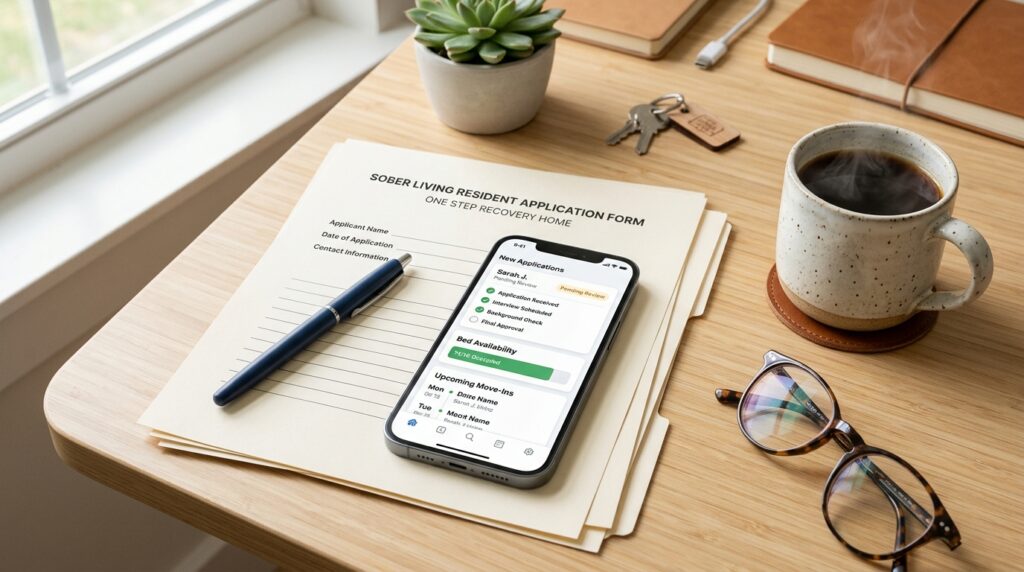
While the typical property management software is helpful in conducting credit checks, tenant screening, and even rental history reports, we know that this often isn’t enough. It’s imperative to have a system that gives you the flexibility to gather the information you need. This usually includes treatment and medical history, criminal justice involvement, emergency contacts, and also the ability to clearly list your program’s requirements. Customizable intake forms give you the opportunity to gather the information that’s important to you instead of being limited to a rigid rental application.
Resident progress and outcomes
With the intersection between peer support and supportive housing ever broadening, it’s more important than ever to have a platform that supports case management. Software specific to recovery housing gives the ability to assign and monitor progress on goals ranging from house chores to securing employment. Being able to evidence these accomplishments to referral channels and community partners not only shows the difference you’re making in the lives of those that you serve, it helps you distinguish your program by quantifying this work. The metrics reported by most property management softwares are certainly useful, but they usually lack reporting around your census, meeting attendance, demographics, and many other useful data points.
Payments designed for program fees
The financial responsibilities of managing a recovery home far exceed collecting rent. Having the ability to accept partial payments, apply scholarship funding, and easily assess different fees for beds within the same property are a few ways life is made easier when you use a system that’s designed for the work that you do.
Consolidation and User Permissions
Utilizing multiple systems to manage your program not only diminishes efficiency, it also makes it difficult to limit access to sensitive information. Whether you run one home or have multiple locations, it’s common to have staff (such as house managers) help carry out day to day operations. When cobbling together spreadsheets to fill in the gaps of your property management system, it can be tough to give enough access for staff to be effective while limiting their ability to see information that may be confidential. You’ll find several courses and communities that provide guidance on how to start and manage a recovery housing business, many of which have even put together a combination of property management systems and other tools to help get you started. While this is certainly helpful, our experience shows that it’s not sustainable and eventually requires migrating to a more specialized platform.
Our conclusion? Resident management software like One Step isn’t just an alternative to property management systems, it’s the right tool for the job. While other generic solutions may be beneficial to real estate investors, they aren’t tailored to address the unique needs of our business. Even when customization is possible, it often requires a major investment of time and money just to make the software functional for a sober house. Want to learn more about why operators like you have switched to One Step and never looked back? Book a free demo so we can get to know you better.