
If you’ve ever looked at an RFP (Request for Proposal) and thought, “This feels way more complicated than it needs to be,” you’re not alone. For many sober living operators, grant funding can feel just out of reach. Not because the work isn’t important, but because the process feels confusing, time consuming, and intimidating.
The good news? Winning RFPs isn’t about fancy language or insider knowledge. It’s about preparation, clarity, and showing funders that your sober living is organized, accountable, and making a real impact.
Here are 10 practical steps to help you feel more confident and competitive when applying for grant funding.
1. Make Sure the Grant Is Actually a Good Fit
Before you write a single word, take a step back and read the RFP carefully. Not every grant is meant for every sober living, and that’s okay.
Ask yourself:
- Do we meet the eligibility requirements?
- Does the grant fund sober living, recovery housing, or related services?
- Are their goals aligned with what we already do?
Applying for grants that don’t fit wastes time and energy. Focus on the ones where your program clearly matches their mission. You can find these on the official RFP listings.
Expert insight: “One of the biggest mistakes we see is organizations applying for every grant they find instead of the right grants,” says Lena Morris, nonprofit funding consultant. “Targeted applications consistently outperform generic ones.”
In fact, organizations that focus only on well-aligned RFPs report up to a 25% higher success rate compared to those applying broadly.
2. Read the RFP All the Way Through (Yes, Really)
It sounds obvious, but this is where a lot of applications fall apart and you might need to know how to read an RFP.
Funders often tell you exactly what they want:
- Word limits
- Required attachments
- Specific questions to answer
- Formatting rules
Missing one small requirement can disqualify an otherwise strong application. Read it once, then read it again with a highlighter.
3. Get Your Basics Organized First
Strong RFPs are built on strong operations. Before you start writing, make sure you have easy access to:
- Your mission statement
- Program description
- Policies and procedures
- Budget and financial records
- Outcome data (occupancy, sobriety milestones, length of stay, etc.)
When this information is organized and easy to pull, writing proposals becomes far less stressful.
Expert insight:“Funders don’t just fund programs — they fund systems,” explains Marcus Hill, former grant reviewer for a regional foundation. “When an organization can quickly produce clean data and documentation, it builds instant credibility.”
4. Be Clear About the Problem You’re Solving
Funders want to know why your sober living matters. Not in abstract terms, but in real world impact.
Instead of:
“Substance use disorder is a serious issue.”
Try:
“In our community, individuals leaving treatment often face long waitlists for stable recovery housing, increasing the risk of relapse during early recovery.”
Be specific. Show that you understand the need and that your sober living directly addresses it.
5. Explain What Makes Your Sober Living Different
There are a lot of sober livings out there. This is your chance to explain what sets yours apart.
Maybe it’s:
- Strong structure and accountability
- Peer support and house leadership
- Clear expectations and routines
- Partnerships with treatment providers or courts
Programs that clearly articulate their structure and outcomes see up to a 20% increase in positive grant feedback compared to those that stay vague.
6. Show That You Can Actually Manage the Grant
Funders want to trust that their money will be used responsibly. That means showing you have systems in place to:
- Track residents and outcomes
- Manage budgets
- Document compliance
- Report results
Sober livings with documented tracking processes are nearly twice as likely to be invited to reapply for future funding.
7. Use Plain Language and Not Grant Jargon
You don’t need to sound like a policy textbook to win an RFP.
Clear, simple writing is usually better than overly formal language. Write like a real person explaining your program to another real person — because that’s often who’s reading it.
If a sentence feels confusing when you read it out loud, simplify it.
8. Answer the Question They’re Asking (Not the One You Want to Answer)
This is one of the most common mistakes in RFPs.
If the question asks about outcomes, don’t spend the whole answer describing daily operations. If it asks about budget use, don’t pivot to program philosophy.
Stick closely to each question. You can always add helpful context — just make sure you’re answering what was actually asked first.
9. Review, Edit, and Double-Check Everything
Before submitting:
- Check for typos and missing attachments
- Confirm word counts and formatting
- Make sure numbers match across the application
- Ensure every required section is included
If possible, have someone else read it. A fresh set of eyes can catch mistakes you’ve looked past a dozen times.
10. Build a System for Future RFPs
Winning grants gets easier over time, if you build systems.
Save strong responses, track deadlines, and keep your documentation updated. The more organized your sober living is and the more you understand funder priorities, the faster and less stressful future applications will be.
Over time, you’ll spend less energy rewriting and more energy refining and improving your proposals.
Final Thoughts
Grant funding can be a powerful tool for growing and sustaining your sober living — but it rewards preparation and structure. RFPs aren’t about being perfect; they’re about showing funders that you’re reliable, intentional, and making a real difference.
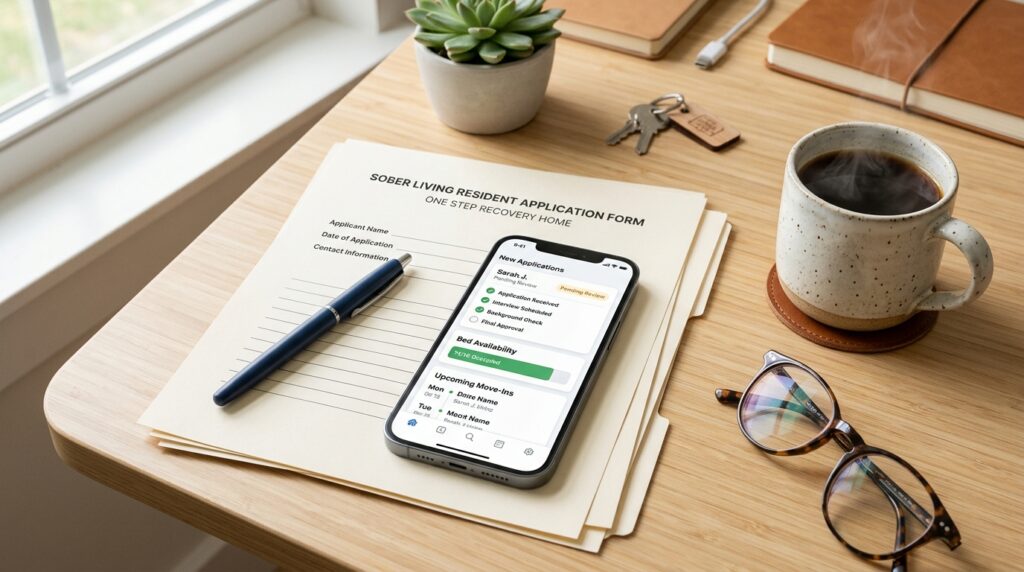
When your operations are organized and your story is clear, winning RFPs becomes much more achievable. Find out more about how One Step can help you stay organized today!
FAQ:
What is an RFP, and why is it important for sober living grant funding?
An RFP (Request for Proposal) outlines how funders want organizations to apply for grant funding. For sober living operators, RFPs are the main way grant makers evaluate whether a program is organized, aligned with their goals, and capable of managing funds responsibly.
What do grant reviewers look for in sober living RFP responses?
Grant reviewers look for clear alignment with their mission, strong structure and accountability, and evidence that your sober living can track outcomes and manage funding. Clear, direct answers and well-organized documentation often matter more than polished language.
How can sober livings improve their chances of winning RFPs?
The biggest factor is preparation. Sober livings that keep documentation, policies, budgets, and outcome data organized are able to submit stronger, more competitive proposals — and do so more efficiently over time.
Do you need a professional grant writer to win sober living grants?
Not necessarily. Many sober livings successfully win grants by writing RFP responses in-house. Strong systems, clear data, and straightforward writing often have more impact than professional grant-writing language alone.