

Empty beds are the most common operational problem sober living operators face, and most of the time, the cause is not a lack of demand. In almost every market, more people need recovery housing than can find it. The gap is almost always a relationship problem. The people and organizations most likely to place a resident with you do not know you exist, do not trust you yet, or have had a bad experience with a previous referral that made them cautious.
Building referrals is not a marketing exercise. It is a relationship-building process that happens over months and requires consistent follow-through. But it is also not complicated once operators understand who the right sources are and what those sources need before they will send someone.
Understand Who Your Referral Sources Actually Are
Not all referral sources are equal, and treating them the same way is one of the more common mistakes operators make when building outreach strategies.
Residential treatment programs are the highest-value referral source for most sober living homes. Clients completing 30 to 90-day treatment programs need somewhere to go immediately on discharge, and treatment teams are actively looking for placement options that meet their standard of care. A 2023 SAMHSA report on recovery housing partnerships describes recovery housing as an important component of the continuum of care between treatment and independent living. Treatment centers that believe in that continuum will refer regularly to homes they trust. Getting on their list requires meeting their criteria for safety, structure, and communication.
Intensive outpatient programs represent a second important source. IOP clients are living in the community while continuing treatment and often need stable, substance-free housing to make that viable. These referrals may be slightly less immediate than residential discharge placements, but they are often well-motivated residents who are actively engaged in their own recovery.
Drug courts, probation departments, and reentry programs are a growing source of referrals in most markets. Court-mandated sober living is an increasingly common disposition, and judges and probation officers refer to homes with a track record of documentation, accountability, and communication with the court. This source is worth developing deliberately and is covered in more detail in the article on working with drug courts.
Peer recovery coaches, recovery community organizations, and family members round out the picture. These sources tend to generate lower volumes but can be consistent over time, particularly for operators with strong community visibility.
Certification Is the Entry Ticket for Most Quality Referrals
Before any outreach strategy will work, the house needs to meet the baseline that quality referral sources require. For most treatment centers, courts, and state-funded programs, that baseline is certification.
SAMHSA’s 2023 guidance recommends certification for all recovery housing entities and calls it “one noted remedy to address unethical and illegal practices in recovery housing.” The National Alliance for Recovery Residences, whose standards are used as the basis for certification in 36 states, provides the framework most certifying bodies use. A home that is not certified is invisible to or explicitly excluded from the referral systems that generate the most consistent volume.
Certification also communicates something to referral partners that words cannot: that the home has been reviewed by an independent body, meets documented standards for safety and operations, and can be held accountable. For a discharge planner deciding where to send a client after treatment, that accountability matters enormously.
Get Listed Where Case Managers Actually Look
Once certified, the home needs to be findable. Case managers and discharge planners use specific tools when searching for placement options, and most of those tools require active listing management.
SAMHSA’s Behavioral Health Treatment Locator is one of the most widely used resources for finding recovery housing. Getting listed is free and takes relatively little time. The NARR directory lists certified recovery residences by state and is actively used by case managers who specifically want certified homes. State-level directories maintained by NARR affiliates, behavioral health agencies, and drug court programs are also worth pursuing in your specific market.
Beyond official directories, Google Business Profile, the SAMHSA treatment locator, and Sober House Directory all receive meaningful traffic from people and professionals actively searching for placement options. Each listing needs to be accurate, up to date, and include bed availability, house rules, and contact information that actually gets answered.
Build Relationships Before You Need Them
The most effective referral development strategy is showing up before you need a placement, not after. Treatment centers, IOP programs, and probation offices receive outreach from sober living operators regularly. What separates the homes that get referrals from the ones that do not is consistency and follow-through over time.
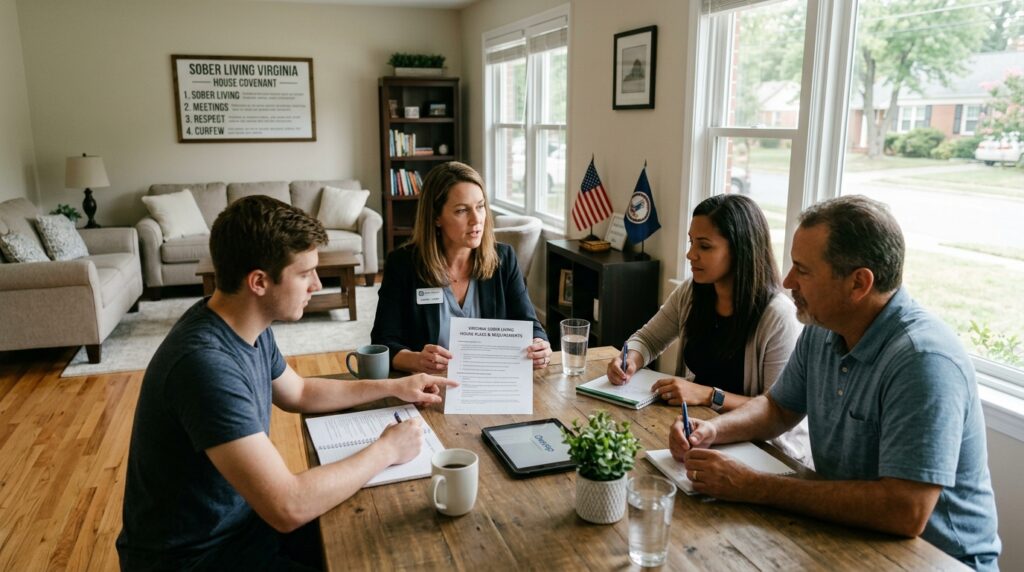
A practical starting point is building a short list of the discharge planners and case managers at the treatment programs and outpatient providers in your area. Introduce yourself in person if possible. Explain what your home offers, what kind of resident it is suited for, and what your intake process looks like. Then stay in contact consistently: a brief weekly update on bed availability is one of the simplest and most effective habits an operator can develop, because partners refer to homes they can reach quickly and trust to have accurate information.
When a partner refers a resident to your home, close the loop. Let them know the person arrived, how the transition went, and how they are doing after 30 days if you have a way to communicate that within privacy constraints. Partners remember the homes that make them feel like the referral was handled well. They forget or stop using the ones that go silent after placement.
Use Outcomes to Build Credibility
Most sober living operators have better outcomes data than they realize, and most of them never use it. If residents are completing their programs, maintaining sobriety, finding employment, and avoiding legal trouble, that information is worth documenting and sharing with referral partners.
The 2025 systematic review in Frontiers in Psychiatry that found recovery housing outperformed standard care on abstinence, employment, and criminal charges is the kind of research that gives credibility to the recovery housing model broadly. But the data that will matter most to a discharge planner considering your specific home is your specific outcomes: how long residents stay on average, what percentage complete the program, and how many remain sober at 90 days.
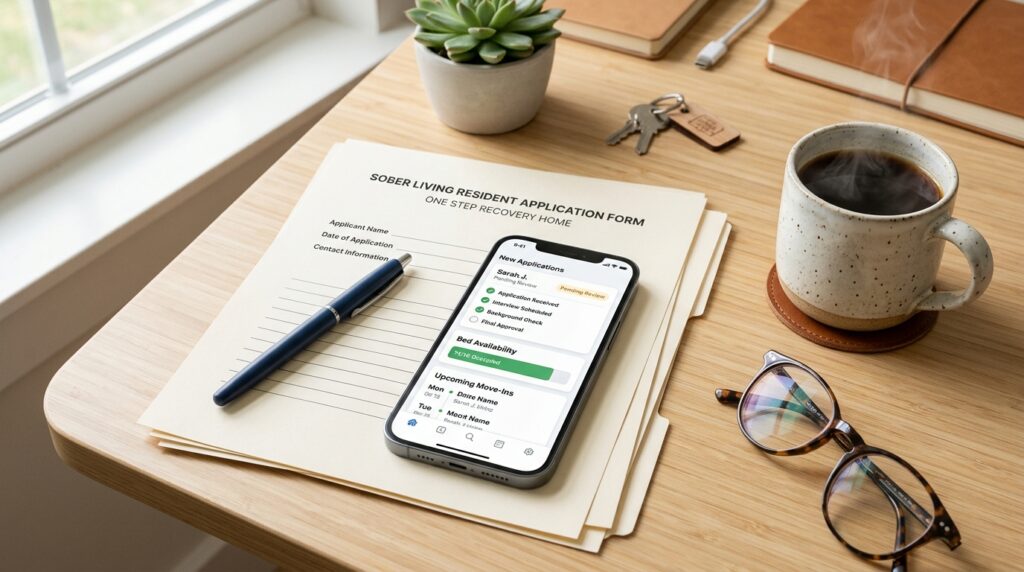
Tracking that data requires systems. Operators who cannot answer those questions during a first conversation with a potential referral partner are leaving credibility on the table. One Step Software gives operators the operational infrastructure to track resident outcomes, document program completion, and produce the kind of summary that builds confidence with partners who are deciding whether to trust you with their clients.
What This Looks Like in Practice
In practice, a referral development strategy for a sober living home has a few consistent components. The home is certified and listed on the directories that case managers use. The operator has a short list of treatment programs, IOP providers, and probation contacts, and communicates with them consistently. Bed availability is easy to share and kept accurate. When a resident is placed, the referral source hears back. Outcomes are tracked and available when the conversation requires it.
None of that is complicated, but all of it requires follow-through. The homes with full occupancy are rarely the ones with the nicest facilities or the most polished website. They are the ones that referral partners trust to take good care of their clients and pick up the phone.
FAQs
How long does it take to build a referral network?
Most operators see their first consistent referral relationships develop within three to six months of focused outreach. Building to a point where occupancy is stable from referrals alone typically takes longer, often closer to a year. The timeline shortens significantly for homes that are certified, well-listed, and responsive to partner communication from the start.
Do I need to be certified to receive referrals?
Not all referral sources require certification, but the highest-quality and most consistent sources increasingly do. Treatment centers, courts, probation departments, and state-funded programs typically require or strongly prefer certified homes. Operating without certification limits access to the referral pipelines that generate the most reliable volume.
What do treatment centers look for before referring to a sober living home?
Treatment centers typically look for certification, clear house rules, a structured intake process, accountability systems for residents, and a track record of communication. They want to know that a client they refer will be safe, that the environment will support their continued recovery, and that the home will contact them if something goes wrong.
Should I focus on one referral source or many?
Most experienced operators develop multiple sources to avoid over-reliance on any single one. Starting with the one or two most accessible sources in your market and building depth there before expanding is a practical approach. Treatment centers and IOP programs are usually the best starting point because they generate consistent volume and tend to refer residents who are motivated and appropriately prepared.
How does software help with referrals?
Referral partners make placement decisions based on trust, and trust is built through operational credibility. One Step Software helps operators maintain the documentation, accountability tracking, and outcome data that referral partners expect to see. When a treatment center asks how your residents are doing or a drug court wants to confirm a resident’s compliance, having that information readily accessible is the difference between a confident answer and an uncertain one.