
Key Takeaways
- Most sober living homes in California do not require a state license from the California Department of Health Care Services (DHCS), provided they offer only housing and peer support and do not deliver clinical or treatment services.
- The moment a home provides services defined under Title 9 of the California Code of Regulations as treatment, including group counseling, detoxification, or formal treatment planning, it crosses into licensed territory and must obtain a DHCS license.
- CCAPP is California’s official NARR affiliate and the state’s recognized voluntary certification body for sober living homes. Certification is not legally required to operate, but is increasingly expected by treatment centers, courts, probation departments, and county-funded programs.
- The Fair Housing Act, ADA, and California’s Fair Employment and Housing Act protect recovery housing from discriminatory zoning restrictions. Still, those protections do not apply to homes that permit residents to use federally illegal substances, including cannabis.
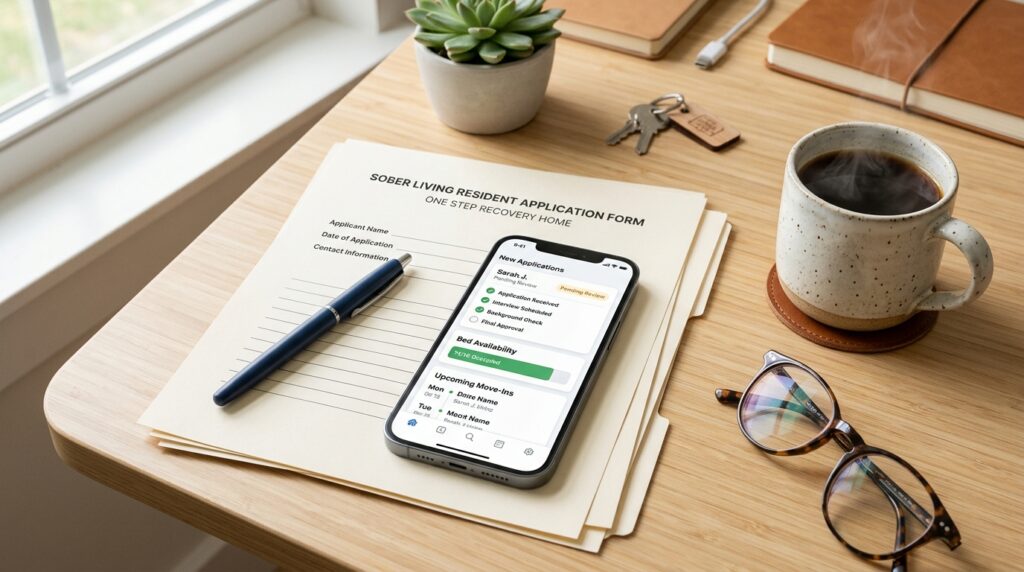
- One Step Software helps California operators maintain the documentation, incident reporting, and operational consistency that CCAPP certification and referral partners expect.
California is one of the most active states for recovery housing in the country, and also one of the more confusing ones for operators trying to understand what the rules actually require. The short answer is that California does not mandate a state license for most sober living homes. The longer answer involves understanding exactly where that exemption ends, what local governments can and cannot require, and why certification matters even when it is not legally required.
Getting this wrong in either direction creates problems. Operators who assume no rules apply end up surprised by local ordinances, zoning challenges, or referral partners who will not work with uncertified homes. Operators who assume they need a full state license may overcomplicate their setup before they have ever housed a resident.
The Licensing Line: Housing vs. Treatment
The foundational rule in California is straightforward, even if applying it requires some care. A sober living home that provides housing and peer support, without delivering clinical services, does not require a state license from DHCS. A home that crosses into treatment must obtain one.
Under Title 9 of the California Code of Regulations, a facility that offers even a single service classified as treatment, including group counseling, formal treatment planning, detoxification, or educational classes structured as therapy, is classified as an Alcohol and Other Drug facility and must be licensed. The distinction is between peer support, which is permitted in unlicensed homes, and structured clinical services, which are not.
This is a line operators need to monitor carefully as their programs develop. House meetings about chores, rules, and recovery accountability are on its right side. Facilitating group therapy sessions with a counselor, or advertising clinical programming as part of the residential experience, is not. DHCS actively investigates complaints and can order closure of unlicensed facilities providing treatment, so this is not a theoretical concern.
Most homes operating under NARR Level I or Level II do not trigger licensure. Homes functioning as Level III or IV, with structured clinical oversight or on-site treatment delivery, typically do.
What California Does Require Even Without a License
Operating without a DHCS license does not mean operating without obligations. California sober living homes that are not required to be licensed still need to meet several categories of requirements.
A local business license is required in most California cities and counties before collecting fees or housing residents. Even non-clinical recovery homes are considered operating businesses and must register with local authorities. Operators should confirm requirements with the city and county in which the home is located before opening.
Zoning and occupancy rules vary significantly by municipality. Many California residential zones allow up to six unrelated adults without special permits under the state’s rules, but local definitions of family, occupancy caps, and parking requirements differ. Some cities impose additional spacing or permitting requirements that go beyond state law. Checking with the local planning and code enforcement office before selecting a property avoids expensive surprises.
Fire safety standards apply to all sober living homes in California, regardless of licensure status. California fire code requirements for smoke detectors, egress, sprinkler systems, and occupant capacity must be met and documented. Insurance is also non-negotiable. General liability coverage is a practical requirement for any operating home, and most certification programs and referral partners require proof of it.
CCAPP Certification: Voluntary but Practically Necessary
California’s NARR affiliate is the California Consortium of Addiction Programs and Professionals, which certifies recovery residences under NARR Levels I, II, and III. CCAPP certification is voluntary at the state level. A 2024 legislative effort to require licensure for homes in residential zones was significantly amended and did not result in a mandatory certification requirement.
Despite that, CCAPP certification has become practically necessary for most operators with serious referral and growth ambitions. Treatment centers, courts, and probation departments increasingly require or strongly prefer certification before placing residents with a home.
County-funded programs and state contracts typically require it as a baseline. CCAPP certification also lists the home in a statewide directory that case managers and discharge planners actively use when searching for placement options.
In Southern California, the Sober Living Network offers membership-based accreditation alongside CCAPP certification. Many homes in Los Angeles, Orange County, and surrounding areas pursue both to maximize their visibility and referral access.
The CCAPP certification process requires operators to submit an application, provide documentation including house rules, resident agreements, liability insurance, safety policies, and a grievance procedure, pass an on-site inspection, and renew certification annually. The documentation requirements are not burdensome for a well-organized home, but they do require that those policies exist in written form before the application is submitted.
Fair Housing Protections and Their Limits
California offers strong protections for recovery housing against discriminatory zoning. The Fair Housing Act, the Americans with Disabilities Act, and California’s Fair Employment and Housing Act classify individuals in recovery from substance use disorders as a protected class. Cities and counties cannot use zoning ordinances to discriminate against recovery housing, and operators have the right to request a reasonable accommodation when a neutral local rule would otherwise block their home from operating.
California courts have upheld these protections in multiple cases, and they are a meaningful defense for operators facing community opposition or zoning challenges. That said, these protections come with a significant condition that operators need to understand.
The federal Fair Housing Act and ADA protections do not apply to individuals currently using federally illegal substances. Because cannabis remains a Schedule I controlled substance under federal law, courts have consistently ruled that housing providers are not required to accommodate its use. An operator who permits cannabis use on the property weakens the home’s legal standing under federal fair housing protections and may create liability exposure in a zoning or land use dispute. Maintaining a clear, documented, substance-free policy, including cannabis, is not only operationally consistent with recovery housing principles but also the strongest legal position available to California operators.
What This Looks Like in Practice
In practice, a California operator running a NARR Level II sober living home needs to register the business locally, ensure the property meets fire and safety codes, maintain general liability insurance, document house rules and resident agreements, and pursue CCAPP certification if they intend to build referral relationships with treatment programs, courts, or county agencies.
None of those steps is administratively heavy if the right systems are in place. The challenge for most operators is not understanding the requirements; it is building the operational habits that make compliance ongoing rather than a one-time task at opening.
One Step Software gives California operators the infrastructure to maintain the documentation, incident records, and resident accountability tracking that CCAPP certification and quality referral partners expect. When certification renewal comes around, or a partner asks for program documentation, having that information organized and accessible makes the difference between a smooth process and a scramble.
FAQs
Does a California sober living home need a state license?
Most do not. Homes with six or fewer residents that provide only housing and peer support without clinical services are generally exempt from DHCS licensure. The exemption ends the moment a home offers services classified as treatment under Title 9 of the California Code of Regulations, including group counseling, detox, or formal treatment planning.
Is CCAPP certification required to operate in California?
No, CCAPP certification is voluntary. However, most treatment centers, courts, and county-funded programs require or strongly prefer it before making referrals or awarding contracts. Operating without certification significantly limits referral access and may exclude a home from county and state funding opportunities.
Can California cities restrict where sober living homes can operate?
Cities can apply neutral zoning rules, including occupancy limits and parking requirements, as long as those rules do not discriminate against recovery housing specifically. Federal and state fair housing laws protect recovery homes from discriminatory zoning, and operators can request a reasonable accommodation if a local rule creates a barrier. Consulting a local land use attorney before selecting a property is advisable in jurisdictions with a history of opposition to recovery housing.
What documents does CCAPP require for certification?
The application requires house rules, a resident agreement, a liability insurance certificate, a grievance procedure, a financial agreement with residents, a medication and infectious disease policy, a confidentiality agreement, and a property ownership or rental permission letter. An on-site inspection is also required. Annual renewal maintains active certification status.
Does California have any requirements around naloxone for sober living homes?
California does not universally mandate naloxone for all sober living homes at the state level, but CCAPP certification standards and many county contracts expect it as a baseline safety measure. Given that CDC data shows nearly 76% of overdose deaths involve an opioid, having naloxone on site and ensuring staff and residents know how to use it is widely considered a standard of responsible operation regardless of formal requirements.