

Key Takeaways
- SAMHSA actively funds drug court expansion through its Treatment Drug Courts grant program, reflecting federal recognition of drug courts as a critical component of the recovery and criminal justice system.
- A 2024 PMC study on recovery housing and justice-involved individuals in Virginia found that criminal-legal-system clients in recovery housing were more likely to achieve completed or successful discharges than non-justice-involved residents, with time in recovery housing associated with lower recidivism, decreased re-incarceration, and reduced re-arrest sustained at 18-year follow-up in prior research.
- NARR certification is the single most consistent requirement that drug courts and probation departments use when assessing sober living placements. Uncertified homes are typically excluded from court referral lists regardless of their operational quality.
- Drug courts need predictability more than anything else. They need to know that a bed will be available quickly, that the program will communicate proactively when something goes wrong, and that the home meets documented standards of accountability.
- One Step Software gives operators the documentation, drug testing logs, and incident records that drug court coordinators need when monitoring participants placed in sober living.
Drug courts represent one of the most consistent and high-volume referral pipelines available to sober living operators. There are more than 3,000 drug treatment courts operating across the United States, and every one of them needs reliable housing placements for participants who cannot return to their previous living situations. For operators who build the right relationships and demonstrate the right operational standards, drug court partnerships can provide a steady flow of motivated residents and strengthen the program’s credibility with every referral partner that follows.
Getting into the drug court pipeline requires understanding how drug courts work, what they need from housing providers, and how to make your program the one they call when a bed is needed.
How Drug Courts Actually Work
Drug courts operate as an alternative to incarceration for individuals whose criminal charges are directly linked to substance use disorder. Rather than sentencing a participant to jail, a drug court judge orders participation in a structured program that typically includes regular court appearances, drug testing, treatment, and compliance with housing requirements. Participants who complete the program successfully may have charges reduced or dismissed. Those who fail to comply face graduated sanctions that can include incarceration.
The drug court team typically includes a judge, prosecutor, defense attorney, case manager, and treatment coordinator. That team makes placement decisions collaboratively, and housing is one of the most critical components of a participant’s plan. A participant who lacks stable, substance-free housing is a high-risk placement for the rest of the program. Drug court teams know this, which is why housing providers who can demonstrate reliability become valued partners quickly.
Research published in PMC examining drug treatment courts and individual-level outcomes found that participation in drug courts overwhelmingly demonstrates improvements in recidivism, drug use, employment, and attitudinal measures. The same research notes that stable housing is one of the most significant factors supporting those outcomes, which is why the relationship between drug courts and recovery housing is increasingly formalized rather than informal.
What Drug Courts Need From a Sober Living Home
Drug court coordinators and case managers make housing placement decisions under time pressure, often needing to move a participant quickly after a court date or release from a short detention. The homes that receive those calls are the ones that have already established trust through consistent communication and documented program standards.
The first thing most drug courts need is certification. In states like Massachusetts, as MASH’s referral guidance documents state, state agencies and their vendors, including drug courts, can only refer clients to certified homes. In states without that formal requirement, the practical reality is similar: drug court teams prefer certified homes because certification means there is an external accountability structure backing the operator’s claims about how the program runs.
The second thing drug courts need is communication. When a participant misses curfew, tests positive, or is asked to leave the program, the drug court team needs to know promptly. Homes that communicate proactively get referrals. Homes that go silent or communicate only when forced to do so. Drug courts are monitoring participant compliance continuously, and they need housing partners who treat that monitoring as a shared responsibility rather than an intrusion.
The third is documentation. When a participant’s compliance comes into question at a court hearing, the case manager needs records. Drug test results, attendance logs, incident reports, and behavioral notes are the evidence that support a court’s assessment of where a participant stands. Homes that maintain organized, accessible records are far easier to work with than those where the same information has to be reconstructed from memory.
How to Get on the Drug Court Radar
Most drug court programs do not maintain a public list of preferred housing providers. Placement decisions are made by case managers and coordinators who have developed relationships with specific homes over time. Getting into that relationship requires being proactive rather than waiting to be discovered.
The first step is identifying the drug courts operating in your area. Most counties have at least one adult drug court. Many have additional specialty courts covering DUI, family, veterans, or mental health cases. Your local courthouse or county government website will typically list these programs, and most have a coordinator who can be contacted directly.
When you reach out, the conversation should be simple and direct. Introduce the home, describe the program level and resident capacity, explain your certification status, and describe what accountability structures are in place: curfew, drug testing, meeting requirements, and how violations are handled. Ask what the court needs from housing partners and how they prefer to be communicated with when issues arise.
Certification is the most important credential to have in hand before this conversation happens.
A 2024 Virginia PMC study specifically noted that criminal-legal-system clients in recovery housing had better retention and discharge outcomes than non-justice-involved residents, suggesting that court-referred residents who are well-matched to structured housing programs do well. That data supports the case for why your program is worth a drug court’s trust, but the certification credential is what opens the door.
What Court-Referred Residents Need From the Home
Residents placed by drug courts are typically in a more structured accountability situation than voluntary residents. They have mandatory court appearances, drug testing requirements set by the court, employment or community service obligations, and treatment participation requirements that are separate from what the sober living program requires.
This creates both an opportunity and a responsibility for operators. Court-referred residents often have higher external motivation to comply with program requirements, because the consequences of non-compliance extend beyond losing a bed. The 2024 PMC study on justice-involved residents in Virginia found that these residents were more likely to achieve completed or successful discharges, which supports the practical experience of many operators who find court-referred residents to be among the more accountable residents in the house.
The responsibility is that the home needs to be genuinely equipped to support that population. This means staff who understand the court compliance requirements, drug testing protocols that meet the court’s standards, and communication channels that allow the home and the court to stay aligned on the resident’s status. Homes that cannot meet those operational requirements should not accept court referrals until they can.
Operators should also be aware of the MAT question in this context. Research noted in federal guidance has documented that the majority of drug court participants with opioid use disorder do not receive MAT despite it being the most evidence-based treatment available, often because of program policies that treat prescribed medication as continued substance use. As discussed in the article on Suboxone policy, homes that accept court-referred residents should have a clearly documented MAT policy that aligns with SAMHSA’s guidance and legal requirements.
Building the Relationship Over Time
A drug court partnership does not become reliable after one placement. It builds through consistent follow-through over many placements. Every time a case manager calls and gets a quick response, every time a positive drug test is reported promptly, and every time a participant exits with a documented record, the relationship grows stronger.
Operators who treat drug court case managers as genuine partners rather than just referral sources invest in that relationship deliberately. A quarterly check-in to share how court-referred residents have been doing in the program is a simple gesture that most case managers appreciate because they rarely get outcome data from housing providers. Sharing anonymized data on completion rates, drug test compliance, and length of stay gives the court team something concrete to present when they justify their housing placement decisions internally.
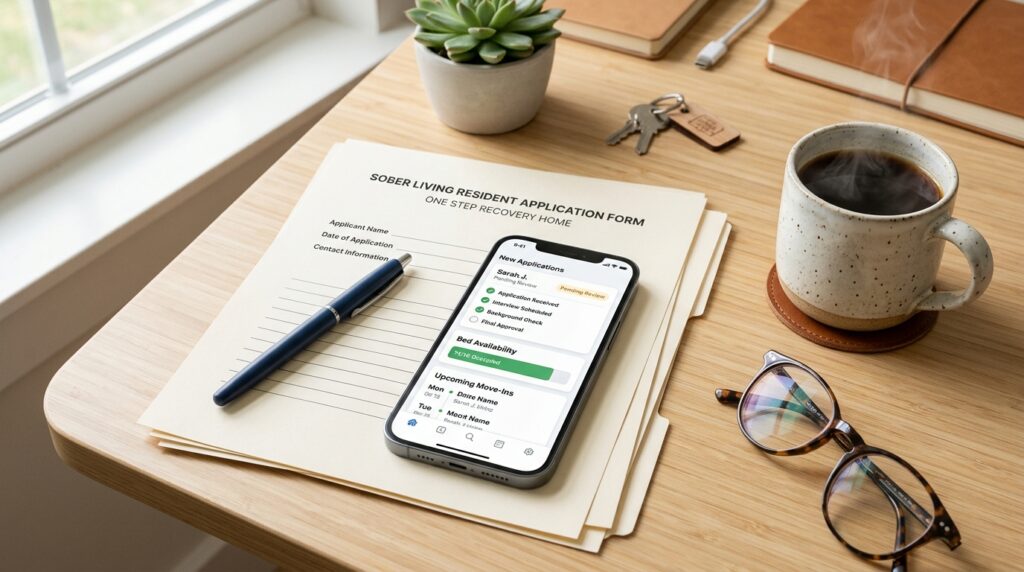
One Step Software gives operators the organized records and reporting capability that makes those conversations easy. Drug testing logs, curfew compliance history, incident records, and discharge documentation are all stored in one place and accessible when a drug court team needs to review a participant’s status or when an operator wants to present outcome data to build the relationship.
What This Looks Like in Practice
In practice, operators who have built strong drug court partnerships run homes that are certified, responsive, and well-documented. When a case manager calls with a placement, the operator can give a clear answer about bed availability and program fit within hours. When a resident has a compliance issue, the court team hears about it the same day. When a resident completes the program, the discharge summary is ready.
Those homes develop reputations in the drug court network that generate steady referrals without ongoing outreach. The investment in certification, documentation systems, and responsive communication pays back through occupancy stability that most operators only achieve through years of relationship-building.
That is the operational foundation One Step Software is built to support.
FAQs
Do I need to be certified to receive drug court referrals?
In most markets, yes. Many states require or strongly prefer certified homes for drug court placements, and in states without a formal requirement, the practical expectation among court coordinators is the same. NARR certification through your state affiliate is the most widely recognized credential and should be in place before approaching drug court programs.
How do I find the drug courts in my area?
Most counties have at least one adult drug court. Your county courthouse website, state court system website, or state substance abuse authority can provide a list. The National Association of Drug Court Professionals also maintains resources for locating courts by state.
What information should I share with a drug court coordinator when introducing my home?
At minimum: your certification status, NARR level, resident capacity, your drug testing protocol, how curfew compliance is tracked, how violations are communicated to the court, and how quickly you can typically accept a new placement. Having a one-page program summary to leave with the coordinator is useful.
How quickly should I communicate with the court when a compliance issue arises?
Same day. Drug courts are monitoring compliance continuously, and delays in reporting create problems for the court team and erode trust in the partnership. Establishing direct contact at the court for compliance communication at the start of each placement makes that communication faster and less uncertain.
Can my home accept both voluntary residents and court-referred residents?
Yes, and many programs do. Ensure that court-referred residents understand that their compliance requirements extend beyond the house rules to include their court obligations, and that the home is equipped to document and communicate accordingly. A mixed population can work well when the program structure is consistent and clearly applied to everyone.