

Key Takeaways
- NARR’s Standard 3.0 requires certified recovery residences to have documented admission criteria that are applied consistently and communicated clearly to prospective residents before move-in. Informal or inconsistently applied screening is both a certification concern and an operational liability.
- The ASAM 4th Edition Criteria, released in 2023 and now the most widely used standard for addiction treatment placement in the US, explicitly includes recovery housing within the continuum of care, providing a clinical framework that helps operators understand when a prospective resident needs a higher level of support than sober living can provide.
- SAMHSA’s 2023 Best Practices for Recovery Housing describes the sober living environment as centered on peer support and accountability, not clinical treatment. Prospective residents whose needs exceed what peer support and accountability can provide require referral, not admission.
- A good intake process protects the applicant, protects the house culture, and protects the operator. Inconsistent screening produces inconsistent outcomes across all three.
- One Step Software centralizes application intake, documents screening conversations, and maintains a complete record of admission decisions that protects the program when those decisions are later questioned.
Accepting the wrong resident is one of the most consequential decisions a sober living operator makes. A person who is not ready for the level of structure your program provides will struggle, may destabilize the house culture, and often exits in a way that damages their own recovery and the program’s relationship with the referral source that sent them. Accepting someone who actually needs a higher level of clinical care is not just a bad placement decision. It is a safety issue.
Getting the intake process right is not about being selective for the sake of selectivity. It is about ensuring that the people who walk through the door have a genuine chance of succeeding in your program, and that the people who do not are connected to something more appropriate for where they actually are in their recovery.
What Sober Living Can and Cannot Provide
Effective screening starts with a clear understanding of what your program actually is. A Level II sober living home provides housing, peer accountability, house structure, and connection to community recovery support. It does not provide clinical treatment, psychiatric care, medical monitoring, or crisis intervention. The people best served by your program are those who can manage basic daily functioning, are committed to sobriety, and need structure and peer support rather than clinical services to continue their recovery.
The ASAM 4th Edition Criteria provides the framework most widely used for placing people along the continuum of addiction treatment care. Within that framework, recovery housing sits in a specific place: it is appropriate for people who have completed or do not need a higher level of clinical care, have reasonable medical and psychiatric stability, and can live in a peer-supported community environment with accountability but without intensive clinical oversight.
When someone presents for admission who needs more than that, accepting them is not
compassionate. It is setting them up to fail in an environment that does not have the tools to support them. Understanding where sober living sits in the continuum is what makes it possible to screen accurately and refer appropriately, rather than accepting everyone who walks in and hoping it works out.
The Core Questions Every Intake Process Should Answer
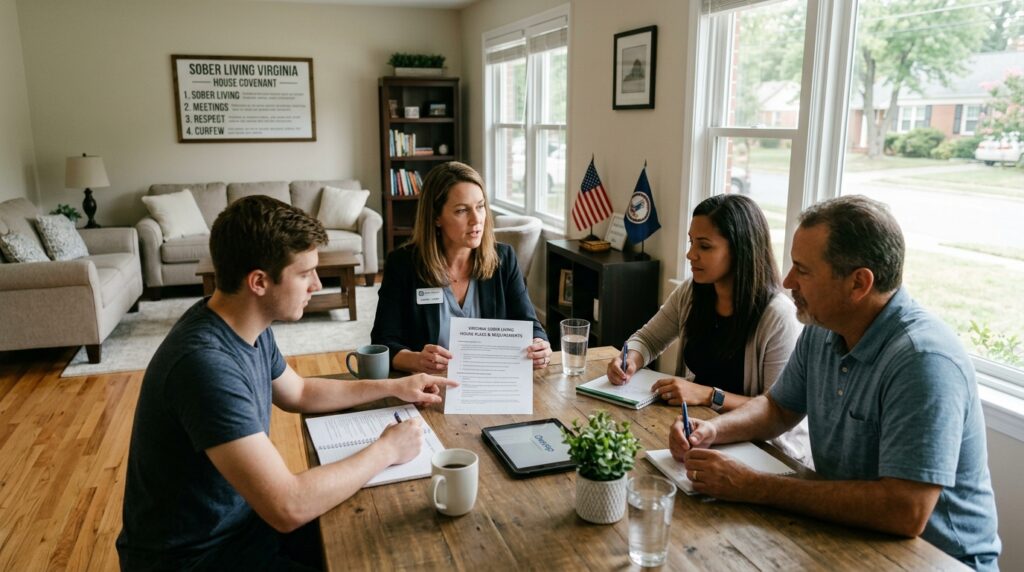
A good intake screening conversation is not an interrogation. It is an honest, direct conversation aimed at understanding whether the prospective resident and the program are a genuine match. The questions below are not a formal clinical assessment tool. They are the practical areas every operator needs to understand before making an admission decision.
What is the person’s current sobriety status, and how long have they been sober?
Most programs require a minimum period of sobriety before admission, commonly 30 to 90 days. Someone who is still using, has used within the last 24 to 48 hours, or who has not yet completed medically supervised detox from substances that require it, does not belong in sober living. They belong in detox or residential treatment.
What treatment have they completed or are they currently engaged in?
Someone stepping down from residential treatment with a completed aftercare plan is a very different admission than someone who has never been in treatment and is seeking sober living as a first intervention. Neither is automatically wrong for sober living, but the context shapes what level of support they are likely to need.
What does their mental health situation look like?
Active psychiatric symptoms, unmanaged mental health conditions, recent psychiatric hospitalization, or significant trauma that has not been clinically addressed are all factors that warrant a careful conversation. Sober living does not provide psychiatric care. A person with significant active mental health needs alongside their addiction may need a clinically integrated setting, which in NARR terms is more consistent with a Level III or IV environment, before they are ready for peer-based housing.
What does their support system look like?
A person with no connection to family, no sponsor, no involvement in any recovery community, and no employment or income is starting at a significant disadvantage in terms of staying stable in sober living. That does not automatically disqualify them, but it does tell you what support they will need and what risks you are taking on.
What is their history with structured environments?
Prior sober living or residential program history, including why they left and how that went, is worth asking about directly. A pattern of exits under negative circumstances from multiple programs suggests that the person may need a level of clinical support that peer-based housing cannot provide.
What is their motivation for wanting sober living?
The honest answer to this question tells you more than the polished one. Someone who is genuinely seeking the structure and peer support of a recovery community is a different applicant from someone who needs a place to stay and is saying what they think the operator wants to hear. This is not something that can always be assessed in a single conversation, but the quality of engagement during intake, the specificity of their answers, and their willingness to discuss their recovery honestly are all data points.
Red Flags That Warrant a Deeper Conversation or a Referral
Certain things that come up during intake should prompt either a more careful conversation before a decision is made or a clear referral to a more appropriate level of care.
Active or very recent use is the clearest flag. Someone who was using within the last few days and has not completed detox needs medically supervised care before sober living. Accepting a person in active withdrawal from alcohol, benzodiazepines, or opioids without medical supervision is a safety issue for the resident and a liability for the program.
Significant untreated mental health symptoms, including active psychosis, current suicidal ideation, or severe depression or anxiety that is destabilizing daily functioning, point toward a higher level of clinical care. A sober living house manager is not equipped to manage psychiatric emergencies, and placing someone in that situation sets them up for a crisis the program cannot handle.
A history of violence or behavior that endangered others in a previous program warrants careful evaluation before admission. This is not a categorical exclusion, but it does require an honest assessment of whether your program’s staffing and structure can manage that risk for the individual and for other residents.
Significant resistance to the program’s basic requirements, including drug testing, curfew, meeting attendance, or the house rules themselves, when expressed during the application process, is a reliable predictor of how the residency will go. Someone who argues about house rules before they have moved in is showing you something worth taking seriously.
How to Refer Out Respectfully
Telling someone that your program is not the right fit is not a rejection of the person. It is an honest assessment of whether the match is right. How that conversation is handled matters enormously, because the person on the other end is typically in a vulnerable position, and the quality of the referral you make may determine whether they get the help they actually need.
A good referral-out includes a clear, honest explanation of why the current program is not the right fit, a specific suggestion of what level of care would be more appropriate, and, if possible, a direct warm handoff to that resource rather than just a name and phone number. Operators who have strong relationships with treatment centers, IOP programs, detox facilities, and higher-level recovery housing programs are better positioned to make those warm referrals quickly.
SAMHSA’s Behavioral Health Treatment Locator is a useful resource for identifying treatment options in your area by level of care and specialty. Having that resource ready and knowing the programs in your community well enough to make a specific recommendation makes the referral conversation more useful for the person receiving it.
Documenting Intake Decisions
Every admission decision and every referral-out decision should be documented. This protects the operator if an admission is later questioned, demonstrates that the program applies its criteria consistently, and creates a record that supports certification compliance.
Documentation does not need to be elaborate. A brief note recording what was discussed during intake, what factors were considered, and what decision was made and why is sufficient. For admission decisions that are straightforward, the standard intake form and a signed resident agreement cover most of what is needed. For decisions that involve judgment calls, a brief written note in the resident’s file creates an important record.
One Step Software centralizes application intake and documents the screening process as part of each resident’s file, so the record is already organized when a certification review, a referral partner inquiry, or a dispute requires it.
What This Looks Like in Practice
In practice, operators with effective intake processes spend less time managing residents who should not have been admitted. They have a clearer house culture because the people in the house are genuinely matched to what the program provides. Their referral relationships are stronger because treatment centers and courts trust that the operator makes honest placement decisions rather than accepting anyone and hoping for the best.
The intake conversation itself becomes less stressful when it is built on clear criteria and honest communication. The operator knows what they are looking for, knows what would lead them to refer out, and is confident in making both kinds of decisions.
One Step Software supports that process by making it easy to move from inquiry to completed application documentation, track where each prospective resident is in the intake process, and maintain a consistent record of admission decisions across the program.
FAQs
What is the minimum sobriety requirement for sober living admission?
Most programs require 30 to 90 days of continuous sobriety before admission. The specific requirement should be defined in your written admission criteria and applied consistently. Programs serving drug court participants or others with external accountability structures sometimes apply different standards, but whatever standard is used needs to be documented and applied the same way for every applicant.
Can I decline an applicant based on mental health history?
Declining an applicant based solely on a mental health diagnosis would raise fair housing concerns. What operators can appropriately screen for is whether the person’s current needs can be safely and adequately met by the program’s level of support. Someone with an active, unmanaged psychiatric condition that requires clinical intervention is genuinely not a match for peer-based housing, and that is a program-fit determination rather than a discriminatory one. Documenting the specific operational reasons for the decision, rather than the diagnosis itself, is the appropriate approach.
How do I handle an applicant who is being pressured by family or a court to enter sober living but does not seem motivated?
External motivation is not the same as no motivation. Some people who initially resist sober living develop a genuine investment in their recovery once they are in a stable environment. That said, someone who is openly resistant to the program’s core requirements during intake, including drug testing, curfew, or meeting attendance, is showing you something worth taking seriously. The intake conversation is the right place to address that resistance directly, explain what the program requires and why, and assess whether the person is willing to engage genuinely rather than just comply minimally.
What should I do if someone comes to my program who clearly needs detox first?
Do not admit them. Connect them directly with a detox resource rather than hoping they can manage withdrawal in a peer-based setting. Medically supervised detox is a safety issue for alcohol, benzodiazepines, and opioids. Having a direct referral relationship with a local detox program allows you to make that handoff quickly and maintain the relationship with the applicant so they can return to you when they are ready.
How does a documented intake process support NARR certification?
NARR’s Standard 3.0 requires certified homes to have written admission criteria that are applied consistently and communicated to prospective residents. Documented screening conversations and admission decisions demonstrate that the program is applying its criteria fairly and transparently, which is exactly what certification reviewers look for when evaluating operational consistency.