

In early recovery, accountability is the backbone of successful sober living. It rebuilds confidence and identity and reduces relapse.
It also doesn’t just happen on its own. Accountability has to be actively cultivated inside the home. As Josh Dikis at Impact Recovery puts it, “If there’s no drug testing, no breathalyzers, no chores — that’s not accountability.”
It’s also more than setting rules. It requires having reliable systems in place to track, reinforce, and follow through on those expectations. When structure is clear and consistently upheld, residents know what’s expected and can rise to meet it.
Let’s talk about how to keep your sober living residents accountable and how sober living tools (e.g., sober living software, resident management platform) can support your efforts.
The Modern Challenges Sober Living Operators Face
Intake packets floating around on desks. Scattered signatures of 30+ residents. Paper chore charts taped to the fridge. Text group chains that you can’t keep up with. Spreadsheet after spreadsheet that only one person understands.
Do these challenges sound familiar? You’re not alone. Many sober living operators end up using a patchwork of systems (some digital, some paper, some in texts, some in group chats). The issue isn’t effort…it’s inconsistency.
Accountability naturally weakens without a single, structured system for tracking expectations and ensuring completion. Residents then often say things like
- “I wasn’t told about the meeting.”
- “No one informed me about that chore.”
- “I thought my rent wasn’t due until next week.”
- “I was away when you gave out the checklist.”
These problems can be disruptive in smaller homes, but with 10, 20, or 30+ beds? They quickly become overwhelming.
Spreadsheets, whiteboards, and text threads create communication gaps, lack transparency, and leave too much room for error. One simple example is rent: when payments are tracked manually, delays or missed checks often lead to resentment.
These aren’t just administrative headaches. When accountability breaks down, structure breaks down inside a sober living home. Relapse risk increases right along with it.
Why Digital Accountability Tools Work
Digital tools provide accountability for residents and staff alike that’s not readily available with manual or hybrid processes in a sober living home:
- Visibility: Everyone (residents and staff) can see expectations and progress in one place.
- Reinforcement: Rules and routines are documented, reinforced digitally (this personal responsibility is necessary for sustained recovery).
- Real-time data: Track behaviors (meeting attendance, drug tests, rent payments) live. Or celebrate milestones, such as digital “badges” for 30/60/90 days sober.
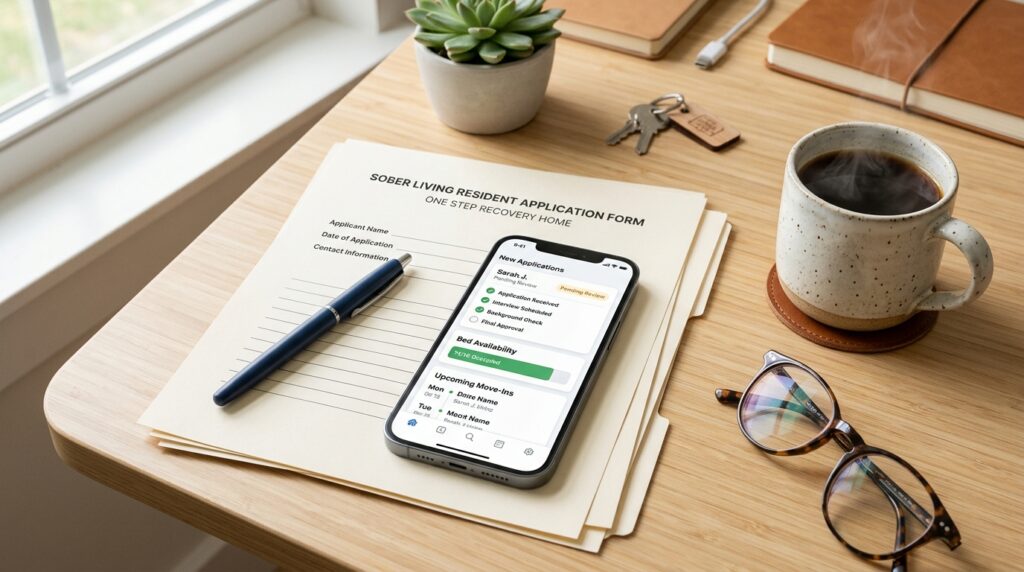
A modern resident management platform like One Step centralizes all these tools, making staff’s jobs easier and residents’ responsibilities clearer.
Core Ways Digital Tools Keep Residents Accountable
If keeping residents accountable is part of the answer to successful recovery, what are ways digital tools (e.g., One Step) can provide this accountability? We’ve narrowed it down to five categories.
1. Daily Check-Ins and Wellness Tracking
With a resident recovery app designed for sober living, residents can complete self-report check-ins. With One Step, residents get push notifications for daily check-ins.
As a manager or staff member, you can quickly detect early warning signs of relapse through the dashboard and view trends. For example, you can view missed meetings or unfinished chores, which helps with honest resident conversations.
2. Meeting and Chore Compliance
Research on sober living homes shows structured environments lower relapse risk. Consistent meetings and daily chores are a major part of this structure. Increase accountability (and visibility) by digitally assigning chores and requiring residents to mark meeting attendance complete.
Note: One Step automatically assigns chores, tracks completion, and flags missing tasks.
3. Random Drug Testing & Secure Logs
Successful sober living environments emphasize “strict drug and alcohol policies” and testing. For fairness and transparency, it helps when residents know drug tests are tracked and staff have reliable records.
Instead of manual clipboards and paper logs, try digital entries, timestamps, and photo/evidence support for these tests and logs. With One Step, you can digitally log tests, integrate notifications, and generate reports.
Note: One Step has helped 2,000 programs save 40-60% more time. Easily add notes, drug test results, and send messages all from the One Step Admin app on your cell phone or tablet.
4. Rent Tracking and Financial Accountability
Tracking rent for sober livings gives staff clarity, and fewer late payments equals a more stable house. Residents also benefit from building real-world budgeting habits.
That’s why we recommend using digital ledgers, auto-reminders, and payment status dashboards. This is a key part of One Step. Track payments by resident and select from auto-late-fee options.
5. Communication Tools That Prevent Misunderstandings
Miscommunication is common among residents (and even the staff) in recovery homes. Clear, centralized messaging can help you avoid conflict.
Implement house announcements, meeting reminders, or rule changes within a single digital system. This reduces confusion and ensures everyone receives the same information. One Step’s built-in communications means fewer “I didn’t get the text” excuses.
What to Look for in a Sober Living Software Platform
When selecting sober living software, evaluate it based on the accountability it offers and its simplicity.
During a software demo, ask questions like “Can I see live resident attendance trends?” “Does the platform support automated reminders?” “Is the rent tracking module integrated or separate?” We also recommend looking for the following features:
- Mobile app
- Rent tracking
- Chore/meeting modules
- Drug-test logging
- Communication tools
- Reporting dashboards
Note: One Step offers all of the above and is built specifically for sober living operations, not just generic property management or treatment centers.
Why One Step Is the Most Complete Platform for Accountability
One Step is the only software designed specifically for sober living and for creating the reliable structure necessary for accountability.
“Adding One Step into our program helped improve our participants’ buy-in into their own recovery. They can actively monitor their program progress and sobriety dates,” says Jennifer B, a One Step client.
It’s not just on the staff side. One user states, “I am totally grateful for this service. It not only helps me to track my sobriety but also gives me the sense of accountability. Keeps me honest and genuine in my new journey of sobriety by, tracking my meetings, helping me set goals and inspiring me every day by a quote. I highly recommend this app.”
Book a demo today to see how One Step can make accountability simple and effective.