
Key Takeaways
- SAMHSA’s 2023 Best Practices for Recovery Housing identifies structure, accountability, and peer support as the core mechanisms that make recovery housing effective. Curfew is one of the most direct expressions of that structure in daily operations.
- A 2023 study published in PMC examining sober living house characteristics and resident outcomes over 12 months found that higher ratings of house safety measures were significantly associated with better resident outcomes, supporting the connection between consistent accountability and recovery stability.
- Research published by the Recovery Research Institute found that recovery residences that enforce house rules and promote resident accountability show positive outcomes, including higher rates of employment, reduced substance use, and lower criminal activity maintained as far out as 18 months.
- Manual curfew systems, including bed checks and sign-in sheets, are inconsistent by design. They depend on a staff member being present and attentive at exactly the right time, every night, without exception.
- One Step Software uses geolocation to allow residents to check in digitally from the house, giving operators real-time visibility into who is home and alerting staff when a resident has not checked in or has left the property after curfew.
Curfew is one of the most basic accountability structures in a sober living home, and one of the most commonly inconsistent ones. Most operators set a curfew. Far fewer have a reliable system for knowing whether residents are actually home when they are supposed to be. The gap between having a rule and enforcing it consistently is where house culture either holds together or quietly comes apart.
This article covers why curfew enforcement matters beyond the obvious, what approaches operators use, and how technology has changed what is practical for even a small program.
Why Consistent Curfew Enforcement Matters
Curfew is not primarily a punitive rule. It is a structure that reduces exposure to high-risk situations during the hours when relapse is most likely to occur. Late nights away from the house, unaccounted time, and uncertainty about where a resident is are all recognized risk factors in early recovery. The curfew exists to reduce those risks, but only if it is actually enforced.
SAMHSA’s 2023 guidance describes recovery environments that center accountability alongside peer support and connection to services as those most consistently associated with positive outcomes. Accountability without follow-through is not accountability. A curfew that residents know will not be consistently checked is a curfew that will be routinely tested.
There is also a fairness dimension that affects house culture. When enforcement is inconsistent, residents notice. The ones who follow the rules resent the ones who do not. Trust in the program erodes. Staff authority weakens. A consistent check-in process removes that dynamic by making accountability neutral and automatic rather than personal and selective.
A 2023 PMC study following 557 sober living house residents over 12 months found that higher ratings of house safety measures were significantly associated with better outcomes on both abstinence and psychiatric symptom measures. Safety measures in that context included structural practices like rule enforcement and resident accountability, not just physical safety features. The data support what experienced operators already know: the houses that hold structure consistently produce better outcomes than the ones that let it slide.
Learn more: How to Keep Your Sober Living’s Residents Accountable and Sober Using Digital Tools – One Step
Why Manual Systems Break Down
Most sober living homes start with some version of a manual check-in process. A sign-in sheet by the front door. A text to the house manager. A bed check at curfew time. These approaches can work in a small house with a fully present manager, but they have structural weaknesses that become more significant as a program grows.
Sign-in sheets are easy to falsify and easy to forget. A resident who signs in and then leaves again has technically complied with the paper process while violating the intent of the rule. A sheet that nobody reviews until the following day is not an accountability system. It is a log.
Text-based check-ins have the same problem. A resident can send a text from anywhere. A manager who is tired, distracted, or dealing with another situation may not notice a missing check-in until the next morning. By then, whatever the resident was doing during the night is already history.
Bed checks require a staff member to physically walk through the house at curfew time every night. In a live-in house manager situation, this is possible, but it strains the manager over time. In a program without a full-time live-in presence, it is not reliably achievable. And in a multi-house operation, it is simply not practical.
How Geolocation Check-Ins Change the Equation
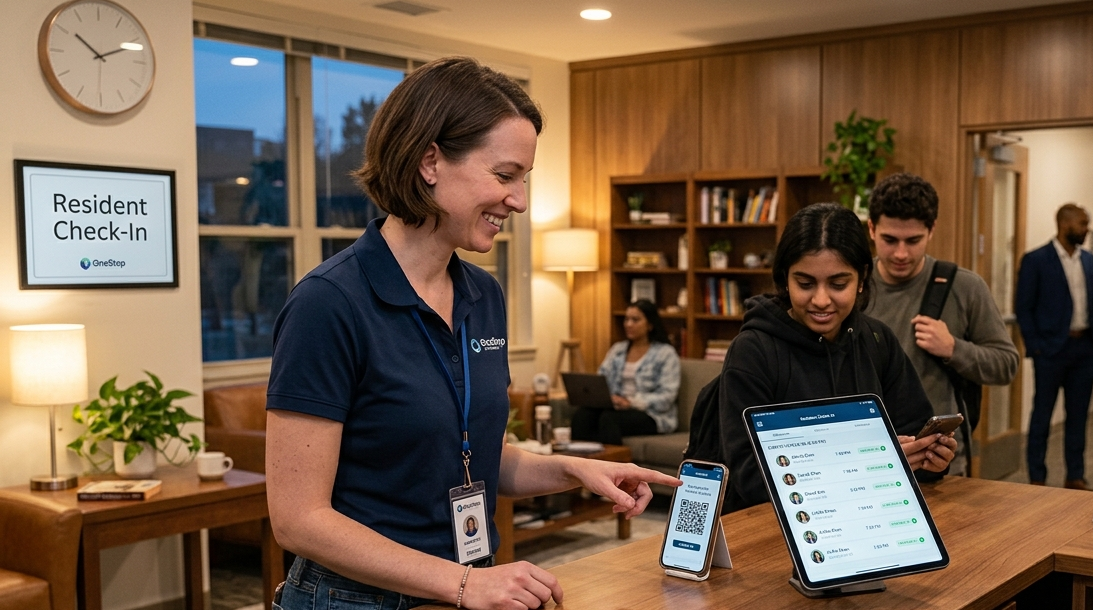
Technology has made a different approach practical for programs of almost any size. One Step Software uses geolocation to allow residents to check in from their house using their phone. The check-in is verified against the home’s address, so it confirms that the resident is physically present at the property rather than somewhere else. Staff receive real-time visibility into check-in status across all residents, and the system alerts staff when a resident has not checked in by curfew or when a resident who has checked in subsequently leaves the property.
This approach removes the two main failure modes of manual systems. First, it eliminates falsification, because a resident cannot complete a geolocation check-in from a location that is not the house. Second, it removes the dependency on a staff member being present and attentive at exactly the right moment, because the system flags missed check-ins automatically rather than relying on someone to notice.
For operators managing more than one house, the visibility benefit is especially significant. Rather than calling each house manager individually to confirm curfew compliance, an operator can check the check-in status across all locations in one place.
One Step’s own research on digital accountability tools notes that verified check-ins using time and location improve adherence to recovery-related activities, and that residents in programs with consistent accountability systems have clearer expectations about what is required of them, which tends to reduce confrontation rather than increase it.
How to Introduce Geolocation Check-Ins to Residents
The way a curfew check-in system is introduced matters as much as the system itself. Residents who feel surveilled rather than supported tend to resist compliance. The framing should be practical and transparent from day one.
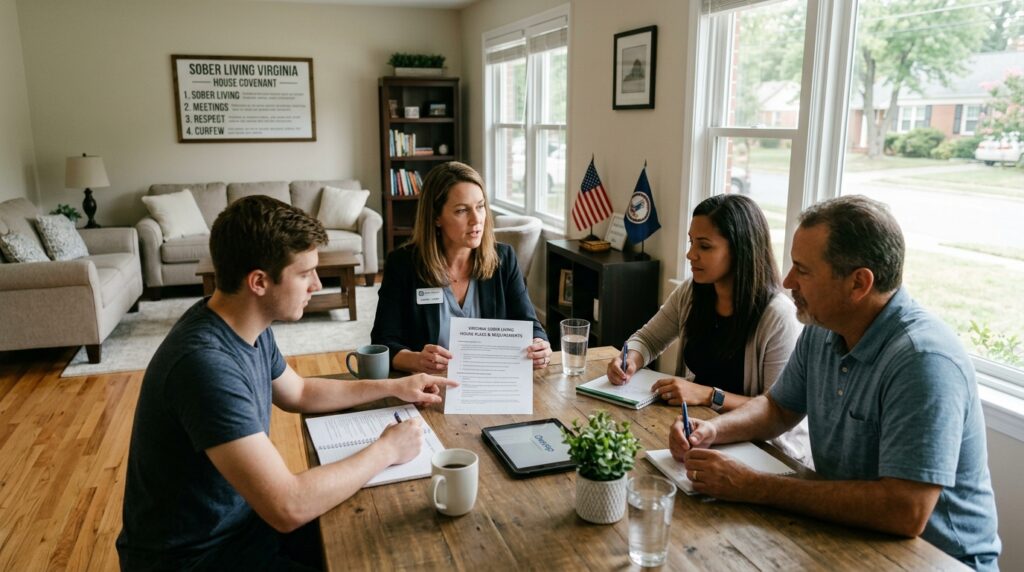
The clearest approach is to explain the system during intake, before the resident moves in. House rules include a curfew. The way residents confirm they are home by curfew is by completing a check-in through the app. Missing a check-in triggers follow-up from the house manager. This is not about distrust. It is the same standard applied to everyone, fairly and consistently.
That framing matters because residents in early recovery often respond better to structure when it feels neutral rather than personal. A digital check-in removes the dynamic where enforcement depends on whether the house manager happened to notice, or whether they like or dislike the resident in question. Everyone completes the same check-in. Everyone is held to the same standard.
NARR’s Level II standards describe monitored recovery housing as using house rules and peer accountability to maintain safe and healthy living environments. A geolocation check-in system is a practical implementation of that standard that works consistently without placing the entire burden on one person.
What Happens When Someone Misses Check-In
The check-in system is only valuable if the follow-up when someone misses is prompt and documented. A missed check-in should trigger a defined response: an immediate contact attempt, a documented record of the attempt and outcome, and a clear escalation path if the resident cannot be reached.
That response needs to be written into the house policy before it is ever needed. Managers who have to decide in the moment what to do when a resident misses curfew will be inconsistent. Managers who follow a documented protocol will not. The protocol protects the manager from accusations of selective enforcement and protects the resident by ensuring that a missed check-in does not go unnoticed until morning.
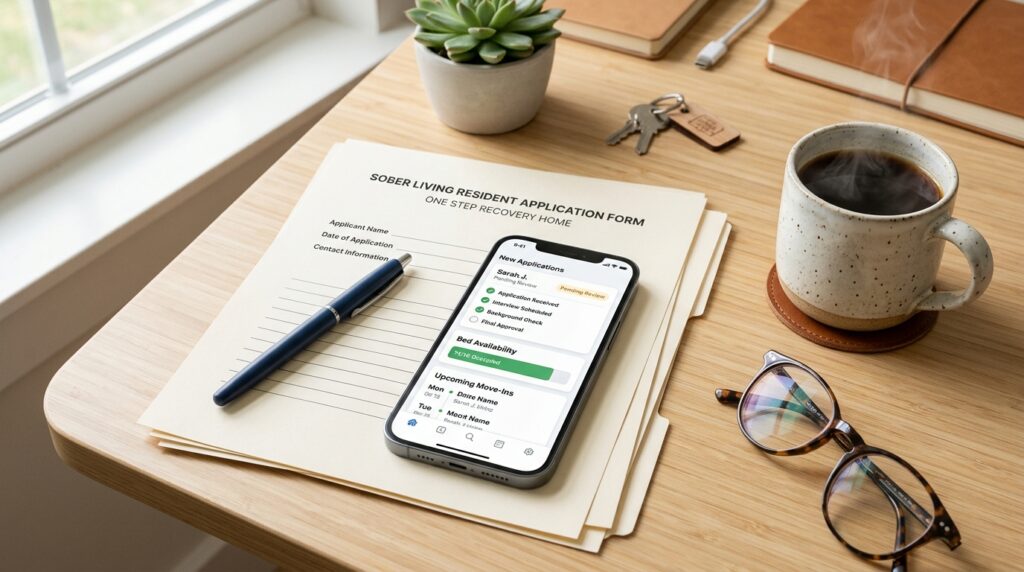
One Step Software logs check-in history and missed check-ins as part of the resident record, which means the documentation is already there when a pattern needs to be addressed, a behavioral contract needs to be written, or a discharge decision needs to be documented with a clear record of prior incidents.
What This Looks Like in Practice
In practice, a well-functioning curfew check-in system runs largely in the background. Residents check in each night as a matter of routine. Staff sees a complete check-in log in the morning without having been up at midnight to verify bed occupancy. Missed check-ins surface automatically and trigger a consistent response. Over time, the data builds a clear picture of each resident’s patterns and allows staff to identify concerning trends before they become crises.
The operational load on house managers is reduced, not increased. And the accountability the system produces is more consistent and more defensible than anything a manual process can reliably deliver.
FAQs
What is the most reliable way to verify curfew without staff being present at midnight?
Geolocation-based digital check-ins are the most reliable approach for programs without round-the-clock staffing. They verify physical presence at the property automatically and flag missed check-ins without requiring a staff member to be awake and monitoring at curfew time. One Step Software uses this approach to give operators real-time visibility across all residents and locations.
Do residents resist digital check-in systems?
Resistance is usually minimal when the system is introduced clearly during intake and applied consistently to everyone. Residents who understand the system upfront and experience it as a neutral, fair accountability tool generally adapt quickly. The homes that encounter the most resistance are those that introduce the system mid-residency or apply it inconsistently.
What should happen when a resident misses a check-in?
The response should be documented in the house policy before it is ever needed: an immediate contact attempt, a log of the attempt, and an escalation path if the resident cannot be reached. A documented protocol produces consistent responses and protects both the manager and the program when the situation needs to be addressed formally.
Can geolocation check-ins work for residents without smartphones?
Most residents in recovery have access to a smartphone, but operators running programs with residents who do not should have a backup process in place, typically a call to a house manager at a specified number. The backup should be documented and treated the same way as the digital check-in in terms of timing expectations and follow-up for missed attempts.
How does curfew enforcement connect to NARR certification?
NARR’s operational standards require consistent application of house rules and documented accountability practices. A curfew policy that exists on paper but is not consistently enforced or documented is harder to defend during a certification review. A system that logs check-ins and missed check-ins as part of the resident record demonstrates the kind of operational consistency that certification bodies and referral partners expect.