

Key Takeaways
- Research published in PMC on house manager roles in sober living homes found that operators most often recruited managers from among successful former residents, but noted the role is frequently experienced as demanding and transitional, making thoughtful selection and support structures critical.
- A 2021 study in the Journal of Community Psychology found that when residents and house managers had larger discrepancies in how they perceived the house environment, residents stayed for shorter periods, pointing to how much the manager’s role shapes retention.
- SAMHSA’s 2023 Best Practices for Recovery Housing describes peer support and consistent structure as the core mechanisms behind recovery housing outcomes, both of which depend heavily on who is managing the house day to day.
- A systematic review in PMC on peer recovery support services found that lived experience makes peer workers more relatable and helps overcome the power differential that can exist between staff and people in recovery.
- The right house manager protects your program. The wrong one can quietly undermine it.
Running a sober living home without a reliable house manager is one of the most common reasons programs struggle. Operators often learn this the hard way. The house culture shifts, accountability slips, residents sense the gap, and problems that a good manager would have caught early become bigger ones. Finding the right person for that role is not a simple hiring task. It takes knowing what the job actually demands, where to look, and how to evaluate someone before putting them in charge of a household in recovery.
What a House Manager Actually Does
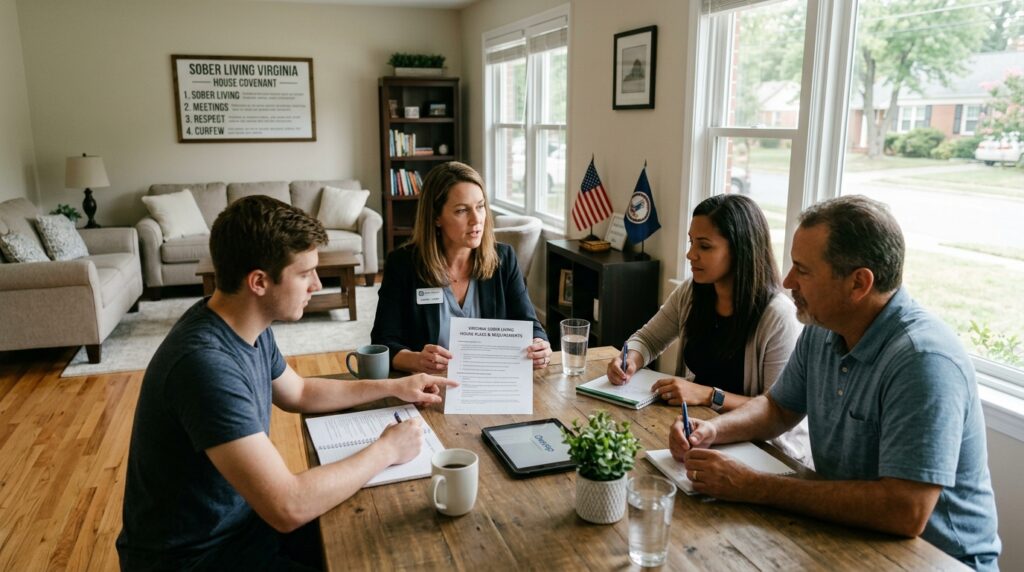
Before searching for someone to fill the role, operators need to be clear on what they are actually hiring for. A house manager at a Level II recovery residence is not a property caretaker. They are the person who sets the tone of the house, enforces structure with consistency, handles crises at any hour, and serves as the first point of contact for residents navigating early sobriety.
Research published in PMC examining house manager roles in sober living homes described the position as combining peer support, rule enforcement, mentorship, and administrative responsibility within a social model recovery setting. The study found that managers were responsible for “overseeing daily operations, enforcing house rules, maintaining safety, and providing peer-based recovery support to residents.” That combination of functions is more demanding than many operators communicate when recruiting.
NARR’s Level II standards require that a compensated person provide oversight in monitored recovery housing. That oversight includes ensuring house rules are applied consistently, documentation is maintained, and the recovery environment reflects the social model principles on which the house is built. A manager who understands those principles and can live them out daily is a very different hire than someone who simply needs a place to stay in exchange for keeping the house orderly.
Why Lived Experience Matters, and Where It Has Limits
Most sober living operators hire house managers from within the recovery community, and there are good reasons for that. A manager who has been through addiction and sustained their own recovery brings something that cannot be trained into someone: credibility with residents.
A systematic review on peer recovery support services published in PMC found that lived experience makes peer workers “more relatable than prescribing clinicians, other medical staff, social workers, and social service staff,” and that the dynamic of shared experience can help overcome the inherent power differential between staff and people in recovery. That relational quality matters inside a sober living house, where residents are more likely to take boundaries seriously from someone who has walked a similar path.
The same research notes a consistent challenge: lived experience alone does not make someone an effective manager. SAMHSA’s 2023 best practices guidance defines recovery housing quality in terms of structure, peer support, and connection to services. A manager needs to be able to build that environment, not just inhabit it. Someone in solid personal recovery who lacks the temperament for boundaries, documentation, or consistent enforcement can still cause real harm to a house culture.
The PMC study on house manager roles noted that the position is “frequently experienced as demanding and transitional,” and that operators who recruited exclusively from former residents sometimes found limitations to that approach. Stable recovery is a necessary condition for the role. It is not sufficient on its own.
Where to Find Candidates
Most good house manager candidates are not responding to a job board posting. They are already embedded in the recovery community. The places most likely to surface strong candidates include:
Local AA and NA meetings, where people with sustained sobriety and leadership qualities are often visible to those who attend regularly. Treatment centers that you have referral relationships with, where staff may know former clients who are ready to take on a responsibility-based role. Recovery Community Organizations, which connect people in recovery with employment opportunities and often have networks of individuals actively looking for recovery-adjacent work. NARR affiliate organizations in your state maintain job boards and professional networks across certified recovery housing providers.
Word of mouth from people you trust in the recovery community will almost always outperform a cold posting. If you already have residents who have been in the house for a significant period, demonstrated good judgment, and shown natural leadership, that is often where the best manager candidates come from. The PMC research confirmed this is the most common recruitment pathway operators use, with the caveat that it requires structured evaluation rather than promotion by default.
What to Evaluate Before Hiring
The interview process for a house manager should go deeper than a standard employment conversation. You are assessing someone’s recovery stability, their understanding of boundaries, their capacity for consistent enforcement under pressure, and their judgment in situations where there is no clear script.
A few areas worth probing directly. Ask how they have handled boundary violations in their own life or in recovery settings they have been part of. Ask what they would do if a resident came home and they suspected use but could not confirm it. Ask how they think about the difference between compassion and enabling. Watch how they respond to ambiguity, because the role involves a lot of it.
Red flags worth taking seriously include very recent sobriety, evasive answers about their own recovery history, a desire to “rescue” residents rather than support their accountability, and any indication that they would look the other way on rule violations out of personal sympathy. The PMC peer support research noted that challenges in this type of role often include fluctuations in availability due to personal struggles, competing financial interests, and insufficient understanding of what the role actually requires from stakeholders. Those are worth exploring before an offer is made.
Practical requirements should also be established clearly before hiring: whether the role is live-in or not, what the on-call expectations are, what documentation responsibilities exist, and what support the operator will provide when the manager faces difficult situations.
Supporting the Manager Once They Are in the Role
Hiring the right person is only half the job. The PMC study on house manager roles described the position as “critical, yet often transitional,” and identified training, support structures, and staffing models as the key factors that determine whether managers stay and perform well or burn out and leave.
A house manager without clear operational systems has to make too many decisions from scratch. When there is no documented process for drug testing, incident reporting, resident warnings, or discharge decisions, the manager becomes the policy, which is inconsistent by definition and unsustainable over time.
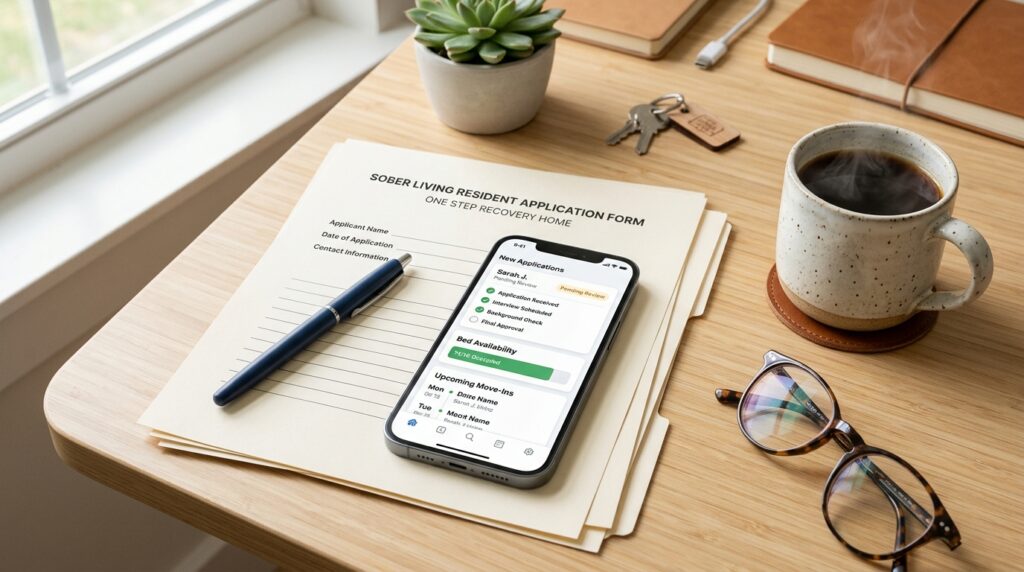
This is one of the practical reasons that One Step Software becomes relevant beyond its administrative benefits. When a manager has clear digital tools for logging drug tests, documenting incidents, tracking resident check-ins, and communicating with the operator, the job becomes less dependent on memory and individual judgment. That consistency protects residents, protects the manager, and protects the program. It also makes it significantly easier to onboard a new manager if a transition becomes necessary, because the institutional knowledge lives in the system rather than in one person’s head.
FAQs
Does a house manager need to be in recovery themselves?
There is no universal legal requirement, but most operators in certified programs hire managers with lived recovery experience. Research consistently shows that shared experience improves credibility with residents and supports the peer-based recovery model. The more important question is whether the person has stable, sustained recovery and the temperament to maintain boundaries under pressure.
What is a reasonable sobriety requirement for a house manager?
Most operators require at least one to two years of continuous sobriety. Some require more, particularly for Level III or IV homes. Very recent sobriety is a consistent red flag in hiring because the demands of the role can put someone’s own recovery at risk if their foundation is not yet stable.
Should a house manager live in the house?
It depends on the level of support the home provides and what your certification standards require. Live-in managers offer round-the-clock presence, which many operators prefer for Level II homes. The trade-off is that the role can become consuming, which is a factor in manager burnout and turnover. Clear boundaries, scheduled time off, and operator support help make live-in arrangements sustainable.
What should a house manager be paid?
Compensation varies by region, responsibilities, and whether housing is included. The role typically involves significant hours and on-call availability, and should be compensated accordingly. Underpaying a house manager is one of the more reliable ways to create turnover, which is one of the most disruptive things that can happen to a sober living program’s stability and culture.
How do I handle it when a house manager is not working out?
Address problems early and document them. Managers who are too lenient with residents, inconsistent in enforcement, or struggling personally need direct feedback and a clear plan. If the situation does not improve, a transition is usually better made sooner rather than later. Having documentation systems in place makes transitions much less disruptive, because the resident history and program records are not dependent on the departing manager.