

Key Takeaways
- A 2020 Cochrane Review published in PMC analyzing 27 studies involving 10,565 participants found that AA and 12-step facilitation interventions produced higher rates of continuous abstinence than other treatments, and did so at significantly lower healthcare costs.
- Research published by the Recovery Research Institute found that requiring AA and NA attendance in sober living homes was directly associated with increased odds of abstinence among residents.
- A longitudinal study published in PMC tracking meeting attendance trajectories over nine years found that by the nine-year interview, abstinence rates were highest among participants who maintained consistent attendance, reaching 78% in the high-attendance group.
- SAMHSA’s 2023 Best Practices for Recovery Housing describes connection to peer support and recovery services as a core component of effective recovery environments, with mutual aid attendance being one of the most accessible forms of that connection.
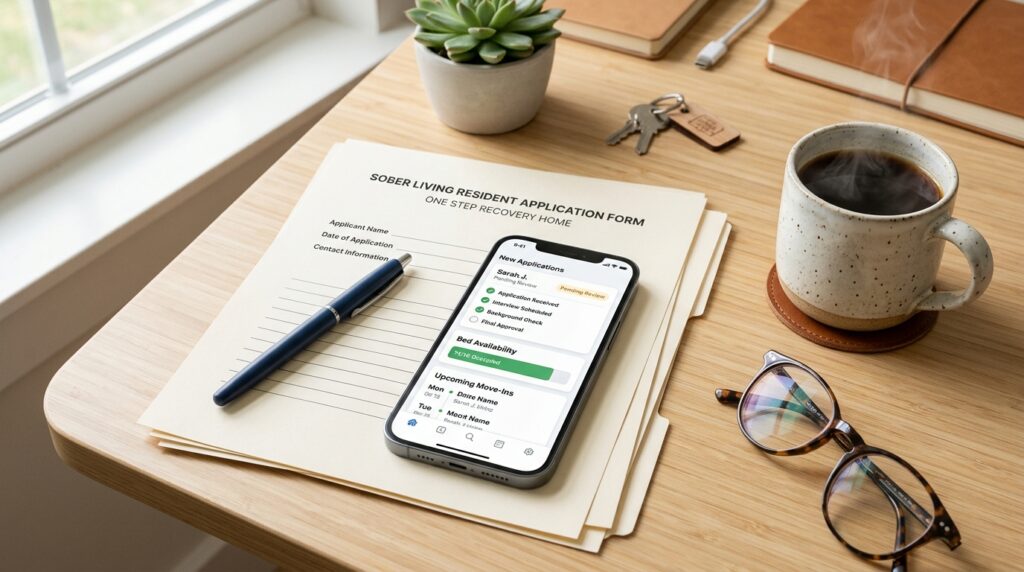
- One Step Software allows operators to track meeting attendance digitally, log signed meeting slips, and maintain a complete record of each resident’s participation throughout their stay.
Meeting attendance is one of the most researched and consistently supported components of recovery housing programs. Requiring it is the easy part. Making sure it actually happens, and documenting it consistently, is where most operators run into problems.
The challenge is not that residents are opposed to meetings. Most are not, especially in early recovery. The challenge is that an informal attendance requirement without a clear verification system becomes a rule that residents gradually test, and staff gradually stop enforcing, until it exists only on paper.
Why Meeting Requirements Matter Beyond the Rule
Most sober living operators require meetings because the 12-step model is foundational to their program philosophy. That is a legitimate reason on its own. But the research behind meeting attendance requirements is also substantial, and understanding it gives operators something concrete to share with residents who question why the requirement exists.
A 2020 Cochrane Review examining 27 randomized and quasi-randomized controlled trials involving more than 10,000 participants found that AA and 12-step facilitation interventions were superior to other treatments, specifically on continuous abstinence and remission, the outcomes that matter most in a sober living context. The review also found that for each additional 12-step meeting attended, there was a measurable reduction in medical costs over a seven-year follow-up period.
The Recovery Research Institute’s analysis of recovery housing characteristics and resident outcomes found that requiring AA or NA attendance was directly associated with increased odds of abstinence. Houses with a stronger 12-step orientation were associated with a greater likelihood of both total abstinence and employment. These are not marginal findings. They represent a consistent pattern across multiple studies.
When residents understand that the meeting requirement is not arbitrary, that it reflects decades of research on what actually supports sustained recovery, they are more likely to engage with it genuinely rather than treat it as a compliance exercise.
The Problem With Informal Verification Systems
The most common way sober living operators verify meeting attendance is a signed meeting slip. A resident brings home a slip from the meeting with the secretary’s signature, hands it to the house manager, and the requirement is considered met. This system is straightforward and widely used.
The problem is that it depends entirely on the house manager collecting, reviewing, and filing those slips consistently, every week, for every resident. In a busy household with multiple residents at different stages of their recovery, that consistency is harder to maintain than it sounds. Slips get lost. Collections get delayed. A resident who has been quietly skipping meetings for three weeks may not be noticed until a house manager finally gets around to reviewing a folder they have not opened in two weeks.
There is also no durable record. If a resident is discharged for repeated missed meetings and disputes the decision, a pile of collected paper slips is not the same as a timestamped log showing exactly which weeks were verified and which were not.
Building a System That Actually Works
Reliable meeting attendance tracking has a few consistent components regardless of what tools an operator uses.
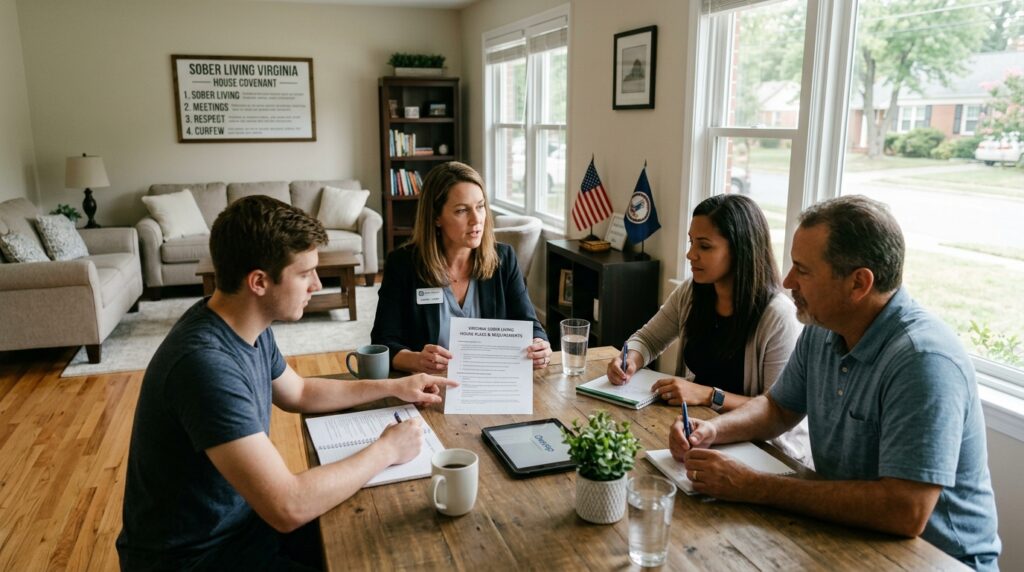
The requirement needs to be specific and communicated at intake. How many meetings per week? Which types of meetings count? Whether house meetings count toward the weekly total or are separate. What documentation is required? What happens when a meeting is missed without advance notice? These specifics should be in the house rules that every resident signs before move-in. Vague requirements are difficult to enforce consistently.
Verification needs to happen on a defined schedule rather than whenever someone gets around to it. Weekly is the standard. A check-in every Monday covering the prior week’s attendance creates a rhythm that both staff and residents can plan around. It also surfaces problems early. A resident who missed two meetings in the first week is a different situation from a resident who has been compliant for six weeks and missed one.
Consequences need to be graduated and documented. A first missed meeting handled with a conversation is different from a third. Having a written protocol, a verbal warning, then a written warning, then a behavioral contract, then a discharge review, with documentation at each step, protects the operator and treats residents fairly.
Learn more: What Are the Most Important House Rules for a Sober Living? – One Step
How Technology Changes Meeting Accountability
Digital tools have shifted what is practical for meeting accountability in sober living homes. Rather than relying on paper slips that can be lost or falsified, and manual collection processes that depend on a house manager’s consistency, platforms built for recovery housing can log attendance digitally with a timestamped record for each resident.
One Step Software supports meeting attendance tracking as part of its resident management platform. Staff can log signed meeting slips digitally, record the meeting type, date, and verification method, and maintain a complete attendance history for each resident throughout their stay. Operators and house managers can see at a glance which residents are current and which are overdue, without sorting through paper files.
For operators managing multiple houses, this visibility across the program is particularly valuable. A house manager at one location may not notice that a resident has been inconsistent, but a program director reviewing attendance data across all houses can see patterns that individual managers might miss.
One Step’s blog on How Technology Can Improve Recovery Outcomes notes that meeting attendance tracking, combined with other accountability tools like geolocation check-ins and drug testing logs, creates a comprehensive picture of resident engagement that supports earlier intervention when someone is struggling.
What to Do When Residents Push Back
Most residents who push back on meeting requirements are not opposed to recovery. They are testing boundaries, feeling resistant on a particular day, or have had a negative experience with a specific meeting format. How staff handle that pushback affects both the individual resident and the house culture.
The most effective response combines holding the requirement firm with genuinely acknowledging the pushback. A resident who says they do not like their home group can be directed to find a different one. A resident who says they have been too busy can be helped to identify meeting times that fit their schedule. A resident who says meetings do not work for them can be reminded that the requirement is part of the program they agreed to, and that alternatives like SMART Recovery can often be accommodated if the operator is open to it.
What does not work is quietly allowing residents to skip meetings without consequence while maintaining the requirement on paper. Other residents notice. The house culture shifts toward treating the rule as optional, and the accountability environment that makes the program effective erodes.
What This Looks Like in Practice
In practice, operators with reliable meeting accountability systems spend very little time enforcing the requirement reactively. Residents know what is expected, they know it will be checked, and they know what happens when it is not met. That clarity removes most of the friction.
Staff spend a few minutes each week reviewing attendance rather than hours chasing down missing slips. Patterns that suggest a resident is struggling surface early enough to respond before they become a crisis. Documentation is already in place when a behavioral conversation needs to happen or a program completion record needs to be produced.
That is the operational environment One Step Software is designed to support. Meeting attendance, curfew check-ins, drug testing, and resident documentation all centralized in one place means staff have the full picture of how each resident is doing without piecing it together from multiple sources.
FAQs
How many meetings per week should operators require?
Most sober living programs require between three and five meetings per week. The right number depends on the program’s philosophy, the NARR level of the home, and what is practical given the availability of meetings in the local area. The requirement should be specific and consistent, and communicated clearly during intake.
Do house meetings count toward the weekly meeting requirement?
That depends on how the operator defines the requirement. Some programs count house meetings toward the weekly total. Others keep house meetings and external recovery meetings as separate obligations. Either approach works as long as it is clearly defined in house rules and applied consistently to everyone.
What if a resident cannot find meetings nearby?
Online meetings through AA, NA, and SMART Recovery are widely available and can substitute for in-person attendance in most programs. Operators should define in their house rules whether online meetings are acceptable and what documentation is required to verify attendance at a virtual meeting.
Can operators allow recovery programs other than 12-step for the meeting requirement?
Many programs accept SMART Recovery, Refuge Recovery, or faith-based recovery programs as alternatives to 12-step meetings. The research base for 12-step programs is stronger and more extensive, but residents who genuinely engage with an alternative program will generally produce better outcomes than those who attend 12-step meetings resentfully and disengage. Flexibility on format with consistency on the requirement is a reasonable approach.
How does meeting attendance documentation protect operators?
When a resident is discharged for repeated missed meetings and disputes the decision, a timestamped digital log showing exactly which weeks were verified and which were not is significantly more defensible than a paper trail that may be incomplete or disorganized. One Step Software maintains that record automatically as part of the resident file, so it is available whenever it is needed.