

Key Takeaways
- SAMHSA’s 2023 Best Practices for Recovery Housing describes recovery housing as a critical component of the continuum of care between clinical treatment and independent living, and treatment centers are identified as one of the primary sources of appropriate referrals.
- A 2025 systematic review published in Frontiers in Psychiatry found that recovery housing consistently outperformed standard continuing care on abstinence, employment, and criminal charges, which is exactly the evidence treatment centers need to justify referring patients to sober living rather than to less structured options.
- Research on discharge planning published in the Journal of Prevention found that effective discharge planning significantly contributes to preventing homelessness and supporting recovery goals, with stable housing as a central component of what makes that planning successful.
- Treatment centers refer to homes they trust. Trust is built through certification, responsiveness, consistent communication, and demonstrated outcomes, not through marketing materials alone.
- One Step Software gives operators the resident outcome data, documentation, and communication infrastructure that treatment center discharge planners expect when evaluating whether a sober living home is a reliable placement partner.
Treatment centers discharge patients every day who need somewhere safe to go next. For most of those patients, sober living is the most appropriate step-down option available. And yet, the relationship between treatment centers and sober living homes is often built on personal acquaintance and informal communication rather than on any deliberate partnership structure.
That gap creates problems on both sides. Treatment teams make placement decisions without good information about which homes are reliable. Sober living operators wait for calls that never come from programs that would refer regularly if they only knew the home existed and trusted what it provided. Closing that gap is one of the highest-leverage things a sober living operator can do to build stable occupancy and serve the community more effectively.
Why Treatment Centers Are Your Most Important Referral Partners
Residential treatment programs and intensive outpatient programs discharge patients into the community every day. Those discharge decisions happen under time pressure, and the teams making them need to move quickly. The first 30 to 90 days after treatment are among the highest-risk periods in recovery, and discharge planners know that placing someone in an unstable or unsupportive environment significantly increases the likelihood of relapse.
Treatment centers that have good relationships with reliable sober living homes solve a real operational problem for themselves. They can discharge patients confidently, knowing those patients are going somewhere with structure, accountability, and peer support rather than back into an environment that contributed to their substance use. That outcome reflects well on the treatment program’s own results, which matters for their accreditation, referral relationships, and funding.
For sober living operators, treatment centers generate the most consistent and highest-quality referrals of any source. Patients leaving residential treatment are typically well-motivated, have had clinical assessment and stabilization, and arrive at sober living with a treatment plan already in place. These are residents who are in a position to benefit from what sober living provides.
SAMHSA’s 2023 Best Practices guidance explicitly frames recovery housing as part of the recovery continuum, not a standalone service. Treatment centers that understand that framing see sober living as an extension of their own work, not a separate entity. Building that shared understanding is the foundation of a good treatment center partnership.
What Treatment Centers Need Before They Will Refer
The decision to refer a patient to a specific sober living home is made by a discharge planner or case manager who is accountable for what happens to that patient after they leave. That person needs to be confident that the home they are recommending is safe, structured, and appropriate for the patient’s specific situation.
Certification is the most important baseline credential. Most quality treatment centers will not refer to uncertified homes, and some have formal policies requiring it. NARR certification signals that an independent body has reviewed the home against national standards and found it meets requirements for safety, resident rights, ethical operations, and recovery support. Without it, a discharge planner has no objective basis for recommending the home to a clinical supervisor or to the patient’s family.
Beyond certification, discharge planners need to know several practical things quickly: what level of support the home provides, what the house rules are, what the curfew and drug testing policies are, whether the home accepts MAT residents and under what conditions, what the cost is, and how quickly a bed can be available. A one-page program summary that answers those questions without requiring a lengthy conversation is one of the most useful tools an operator can have.
Responsiveness matters as much as any of this. Discharge planners often need to move within hours. A sober living home that does not answer calls, return messages the next day, or give vague information about availability will not be on the short list when a placement is needed urgently. The homes that get consistent referrals are the ones that pick up the phone.
How to Build the Initial Relationship
The treatment center partnership does not start with a referral. It starts with an introduction. Most treatment centers have a clinical director, discharge planner, or case management team whose job includes identifying appropriate placement options for patients. These are the people to meet.
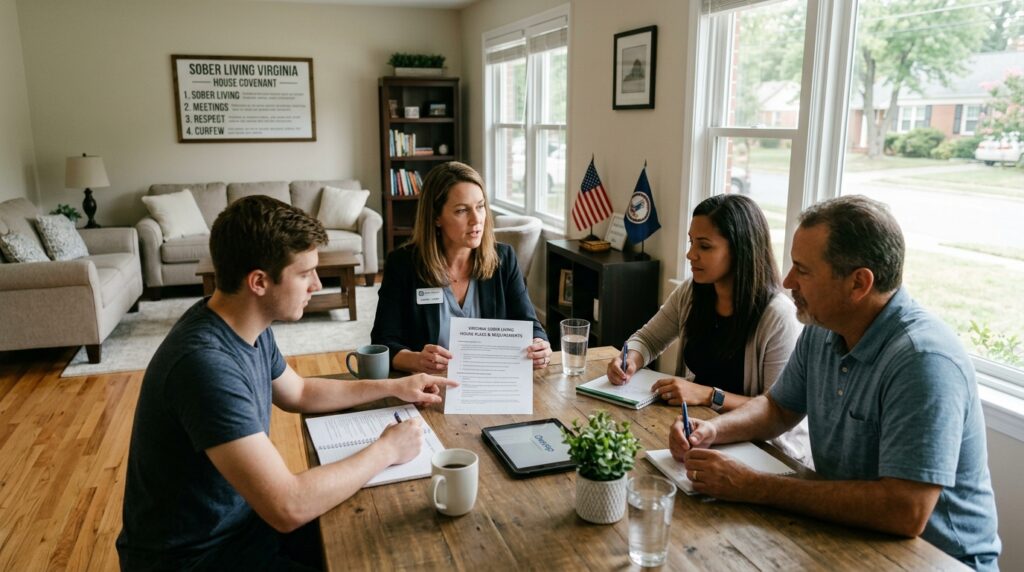
The most effective first contact is in person. A brief visit to introduce the program, leave a program summary, and offer a tour of the home takes less than an hour and accomplishes more than weeks of email outreach. The goal is not to pitch or sell. It is to give the discharge planner enough information and enough of a personal connection that your home comes to mind when a placement is needed.
Ask what the treatment team looks for in a sober living placement. The answer will be specific to that program’s patient population and philosophy. A treatment center specializing in young adults may prioritize different things than one serving primarily court-ordered participants. Understanding what they need and demonstrating that your program meets it is more effective than a generic program description.
Offer a tour of the house. Discharge planners who have seen a home in person refer to it more confidently than those who have not. A clean, organized, well-managed house speaks for itself in a way that no brochure can replicate.
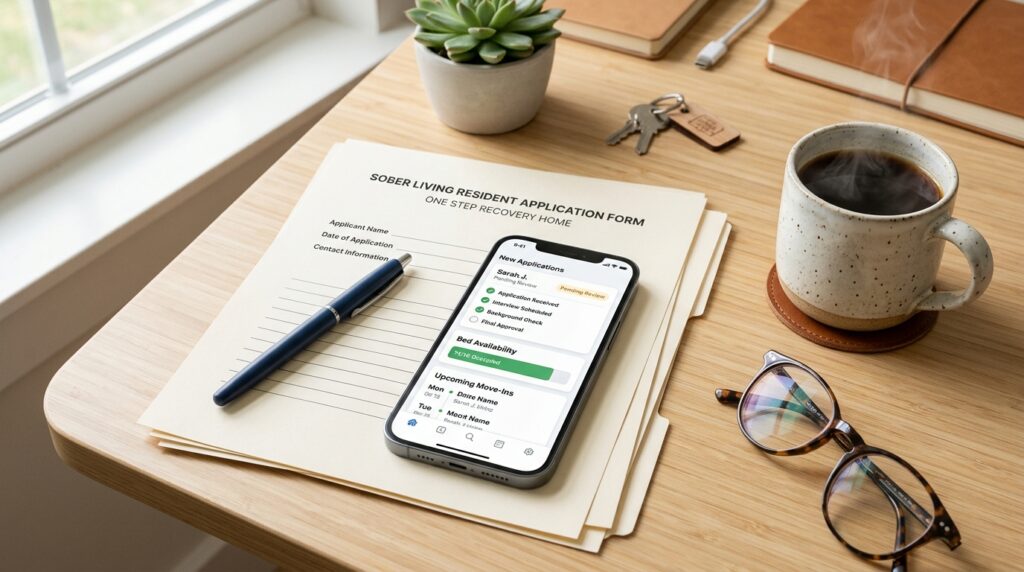
Keeping track of those relationships as they develop is where a CRM becomes useful. One Step Software includes a CRM feature that allows operators to log every treatment center contact, track communication history, and record which community partner referred each incoming resident. When a new resident is admitted, the referring treatment center can be tagged directly in their profile.
How to Keep the Relationship Active
An introduction is not a relationship. Most treatment centers interact with dozens of potential referral sources every year and refer consistently to only a handful. The homes that become reliable partners maintain the relationship through consistent, low-friction communication over time.
A weekly bed availability update sent by email or text takes five minutes and keeps the home visible when a placement is needed. It does not need to be elaborate: the number of available beds, a contact number, and any relevant program updates are sufficient. The habit of sending it consistently is what matters.
When a referral is placed, close the loop. Let the treatment team know the person arrived safely. Follow up at 30 days with a brief status update if privacy conditions allow. Discharge planners rarely receive feedback on what happened to patients they placed. The home that communicates back becomes the home they trust for future placements.
When something goes wrong, and it will, communicate proactively rather than going silent. If a resident from a treatment center’s program has a positive drug test, misses curfew consistently, or is being asked to leave, the treatment team should hear about it from the sober living operator rather than from the patient or their family. That communication protects the relationship even when the news is difficult.
Using Outcome Data to Build Credibility
Most sober living operators have outcome data they are not using. If residents are completing programs, maintaining sobriety, finding employment, and avoiding legal trouble, that information is worth documenting and sharing with treatment partners.
The 2025 systematic review in Frontiers in Psychiatry that found recovery housing outperformed standard continuing care on abstinence, employment, and criminal charges gives treatment centers a research basis for recommending sober living as a step-down option. But what will move a discharge planner from general confidence in recovery housing to specific confidence in your home is your specific outcomes: how long residents stay on average, what percentage complete the program, and how many are employed at 60 days.
Tracking that data requires organized systems. One Step’s outcomes dashboard includes a graph showing the percentage of referrals by CRM source, which means operators can see at a glance exactly how much of their occupancy is coming from each treatment center relationship. That data makes the conversation with a clinical director significantly more concrete. Instead of describing the partnership in general terms, the operator can show it.
Operators who rely on memory or scattered paper files cannot produce a credible outcome summary. One Step Software centralizes resident records, program completion data, and discharge documentation in one place, making it practical to generate a summary that supports the treatment center conversation rather than requiring the operator to reconstruct information from multiple sources.
What This Looks Like in Practice
In practice, operators with strong treatment center relationships maintain a short list of clinical directors and discharge planners they contact regularly, send consistent bed availability updates, respond quickly to placement inquiries, and follow up after placements to let the treatment team know how things are going.
They know what each treatment center’s patient population looks like and can have an honest conversation about whether a specific patient is a good fit for their program. They have program materials ready that answer the discharge planner’s most common questions without requiring a lengthy intake conversation. And they have outcome data available when a clinical director asks how their referred patients have done.
Those habits do not require significant time. They require consistency, responsiveness, and the operational infrastructure to back up what the operator is saying about the quality of the program.
One Step Software provides that infrastructure, keeping the documentation organized and accessible so that when a treatment center asks a question, the answer is ready.
FAQs
How do I get a treatment center to refer me for the first time?
Introduce yourself in person to the discharge planner or clinical director, leave a clear one-page program summary, offer a house tour, and ask what they look for in a sober living placement. Having NARR certification in place before that conversation is the most important prerequisite. A single good placement handled well will generate more referrals than any amount of outreach.
What should a program summary include for treatment center discharge planners?
At minimum: your NARR certification level, the type of resident you serve, your house rules and accountability structure, your drug testing policy, your MAT policy, your cost and payment structure, how quickly you can typically accept a new placement, and a direct contact number that gets answered promptly. One page is enough. The goal is to answer the questions a discharge planner needs answered in under two minutes.
How do I handle it when a treatment center refers someone who is not a good fit?
Be honest early rather than accepting a placement that creates problems for the resident and the program. A brief intake conversation before move-in should identify obvious mismatches. If it becomes clear during that process that the resident needs a higher level of support than your program provides, say so clearly and offer to help identify an alternative. Treatment teams respect honest boundaries more than operators who accept everyone and then struggle.
Should I have formal referral agreements with treatment centers?
Formal agreements are not always necessary, but can be useful for programs that refer regularly, particularly if the treatment center has compliance requirements around referral documentation. At a minimum, having a clear written understanding of how communication will work, what information will be shared, and what privacy protections apply is good practice for any ongoing referral relationship.
How does software help with treatment center partnerships?
One Step Software helps in two ways. First, it keeps resident documentation organized so that when a treatment team asks about a patient they referred, the information is accessible. Second, it supports outcome tracking, making it practical to produce the program performance data that builds credibility with clinical directors who need to justify placement decisions to their own supervisors.